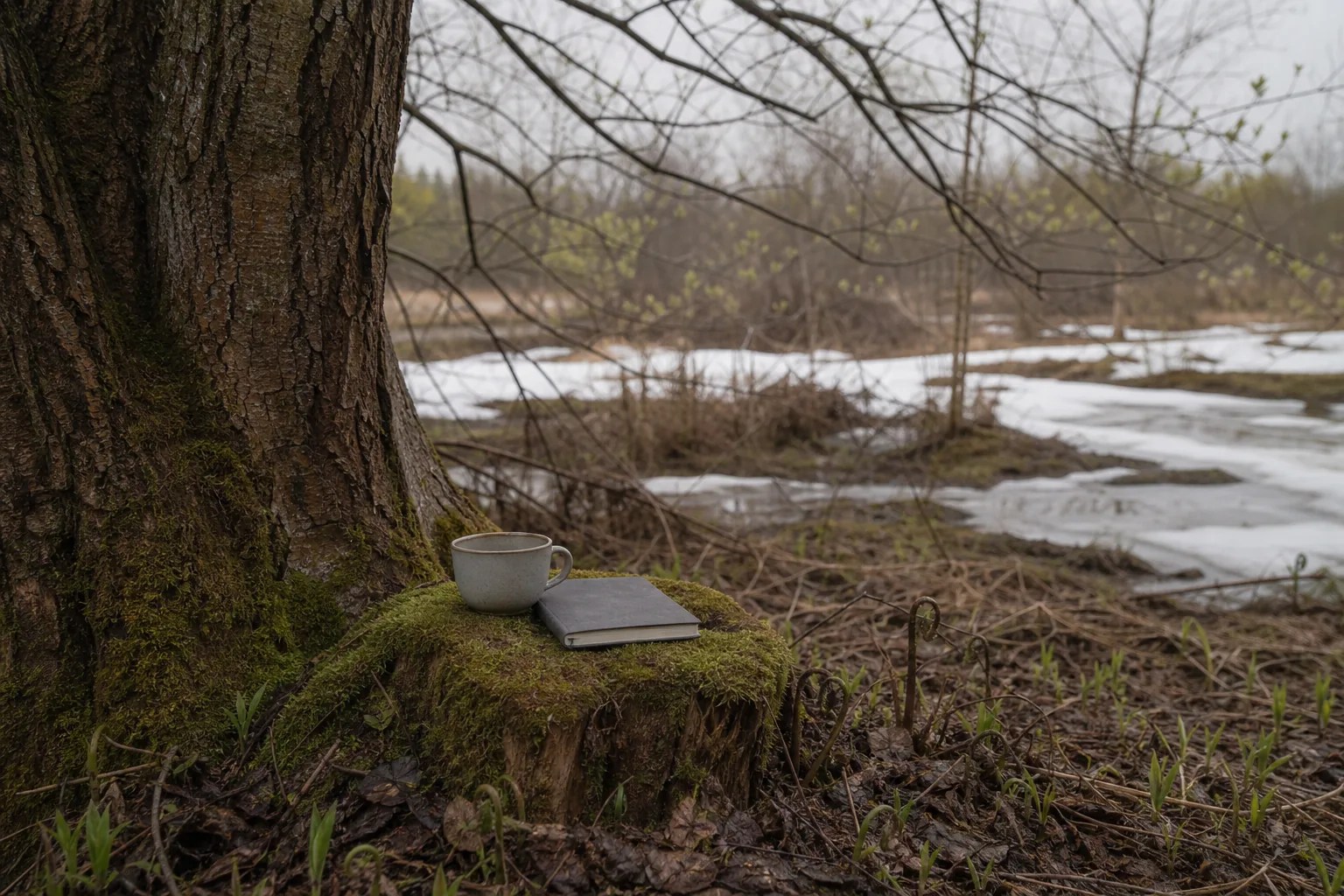
Choose spring when local buds are opening, tender shoots are emerging, and early flowers are active—not because a calendar says March or April.
Being Tea Co provides education, not medical advice, treatment, or positive plant identification. Natural does not mean risk-free. Never ingest a wild plant or fungus from a photograph, app result, common name, or this website alone.
Herbs can cause allergic reactions and interact with medicines. Pregnancy, breastfeeding, childhood, surgery, seizure history, kidney or liver conditions, and other health factors can change what is appropriate. Ask a qualified clinician or pharmacist about your own situation.
Research lead—not identification, permission, or a safety clearance.
Alaska & Subarctic North
- Fireweed — Young growth is a research lead only when the colony was independently confirmed in flower in a prior season; poisonous dogbane is the critical young-shoot confuser. Safety class: Guided food use · medicinal use learn only.
- White spruce tips — Tender new Picea glauca tips after budbreak; mentor-first and no beginner recipe. Safety class: Mentor-first · field identification required.
- Stinging nettle — Young pre-flowering growth in a clean permitted patch; full ID and handling review required. Safety class: Guided beginner · field identification required.
- Common dandelion — Young leaves or flowers from a known unsprayed site; treat as food, never detox. Safety class: Guided beginner · field identification required.
Pacific Coast
- Stinging nettle — Young pre-flowering growth may be present; timing varies from coastal lowlands to mountains. Safety class: Guided beginner · field identification required.
- Common dandelion — Young growth in a known clean patch; widespread does not mean uncontaminated. Safety class: Guided beginner · field identification required.
Interior West & Southwest
- Common dandelion — Cool-season young growth where the plant is locally verified; avoid irrigated sites with spray or runoff uncertainty. Safety class: Guided beginner · field identification required.
Great Plains & Midwest
- Common blue violet — Use the flowering whole plant to establish Viola sororia; never select spring leaves alone because toxic lesser celandine can confuse beginners. Safety class: Guided food use · medicinal use learn only.
- Common dandelion — Young leaves and flowers in known unsprayed ground. Safety class: Guided beginner · field identification required.
- Stinging nettle — Young pre-flowering growth in locally suitable moist habitat. Safety class: Guided beginner · field identification required.
Great Lakes, Northeast & Appalachia
- Common blue violet — Flowering season supplies essential identity traits; take only a few leaves or flowers from a robust unsprayed permitted colony. Safety class: Guided food use · medicinal use learn only.
- White spruce tips — Only within verified Picea glauca range and with in-person identification; not generic evergreen tea. Safety class: Mentor-first · field identification required.
- Stinging nettle — Young pre-flowering growth in a clean permitted patch. Safety class: Guided beginner · field identification required.
- Common dandelion — Young growth from a known unsprayed site. Safety class: Guided beginner · field identification required.
Southeast & Gulf Coast
- Common blue violet — Where Viola sororia is confirmed in flower, ordinary food use is possible; local species and toxic lesser celandine must be ruled out. Safety class: Guided food use · medicinal use learn only.
Before acting on any lead
- Verify the scientific name and exact part with current regional references.
- Confirm at least three positive traits and rule out named lookalikes.
- Check current rules and obtain permission for the exact parcel.
- Exclude contaminated sites and sparse or sensitive populations.
- Review the complete profile’s interaction and preparation sections.
 Being Tea Co