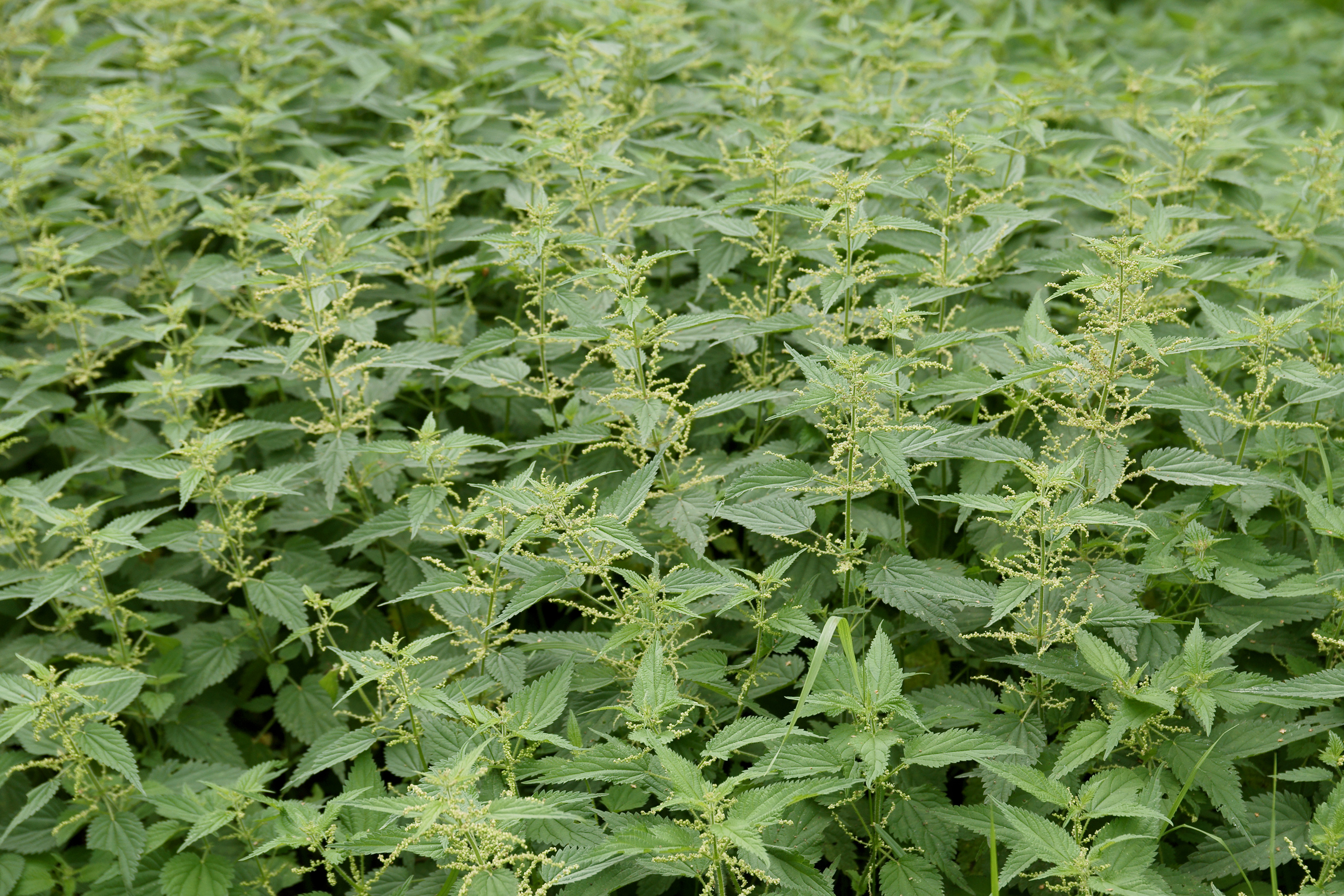
A nutritious plant after correct handling, but raw fresh leaves sting and lookalike, pregnancy, kidney, and medication questions require care.
Being Tea Co provides education, not medical advice, treatment, or positive plant identification. Natural does not mean risk-free. Never ingest a wild plant or fungus from a photograph, app result, common name, or this website alone.
Herbs can cause allergic reactions and interact with medicines. Pregnancy, breastfeeding, childhood, surgery, seizure history, kidney or liver conditions, and other health factors can change what is appropriate. Ask a qualified clinician or pharmacist about your own situation.
At a glance
| Scientific name | Urtica dioica |
|---|---|
| Exact part | Young leaf, fully dried or cooked to neutralize stings |
| Safety class | Guided beginner · field identification required |
| Source | Purchased dried leaf or verified clean patch |
| Season | Young growth generally in early spring before flowering |
| Broad region | Widespread in moist, disturbed habitats across North America |
Research lead—not positive identification or permission to harvest.
Identity
- Opposite, coarsely toothed leaves on a ridged, often four-sided stem.
- Stinging hairs occur on leaves and stems; observe without using bare skin as a test.
- Confirm young plants with several characters and a current regional source before harvest.
Lookalikes and exclusions
Motherwort, figwort, white snakeroot, and other opposite-leaved plants can confuse novices. A photo or the presence of hairs alone is insufficient.
Do not proceed if
- The scientific name, exact plant part, or maturity stage is uncertain.
- A dangerous or confusing lookalike has not been ruled out with current regional sources.
- The landowner or land manager has not expressly allowed collection.
- The population is sparse, protected, stressed, culturally sensitive, or needed by wildlife.
- Road runoff, spraying, industrial history, pet waste, polluted water, mold, or other contamination is possible.
- Your allergy, pregnancy, breastfeeding, childhood, surgery, health-condition, or medication questions have not been resolved.
Where and when
Look only in clean, permitted sites. Moist disturbed ground also receives runoff and human or animal contamination, so habitat is not a safety guarantee.
Harvest ethics
Wear gloves, clip above a node, avoid uprooting, and leave most of a patch. Stop before a harvest path becomes visibly thinned.
Culinary and traditional context
Nettle has food, fiber, and folk traditions. Keep those histories distinct from modern treatment claims.
What the research can—and cannot—say
Nettle can be a food after correct processing, but broad claims about allergies, inflammation, prostate disease, blood sugar, or “detox” are not established by a household infusion.
Side effects and interactions
- Never swallow raw fresh leaves; stinging hairs can injure the mouth and throat.
- Pregnancy guidance is inconsistent and some authorities advise avoiding nettle tea.
- Kidney conditions, fluid balance, diabetes or blood-pressure medicines, diuretics, pregnancy, and breastfeeding need clinician or pharmacist review.
Preparation
Purchased, food-grade dried nettle is the beginner route. Follow package directions. If a qualified local teacher has verified a legal clean-site harvest, dry leaves completely or use a tested blanching method to neutralize stings. A modest tasting cup is 1 teaspoon fully dried leaf in 250 mL just-boiled water, covered 8–10 minutes, then strained.
Kitchen ritual & folklore
Gloves, patience, and full processing make nettle a useful symbol for boundaries and transformation. That is ritual language, not evidence of a body effect.
Folklore and personal ritual are presented as cultural or reflective practices. They are not evidence that an ingredient changes physiology, treats illness, predicts events, or is safe for a particular person.
Sources and review
- Oregon State University Extension: Wild Edibles—Stinging Nettle
- University of Minnesota Extension: Stinging Nettle Identification
- NIH LactMed: Stinging Nettle
Editorial safety review: July 29, 2026. Re-check linked sources, local rules, and product labels before use; evidence and regulations change.
 Being Tea Co
