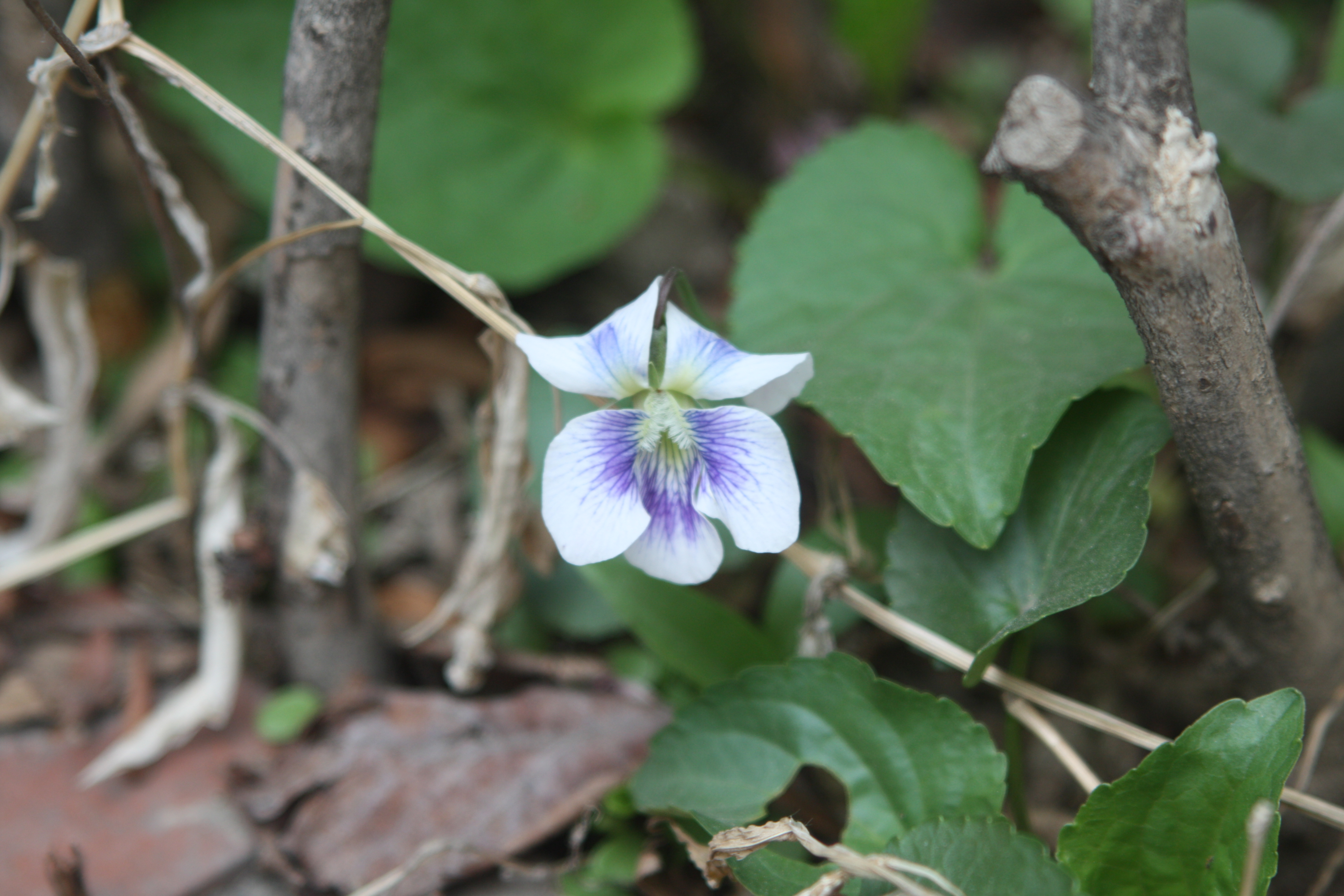
An edible eastern violet in ordinary food amounts, with a toxic leaf-stage confuser and no species-specific human treatment evidence.
Being Tea Co provides education, not medical advice, treatment, or positive plant identification. Natural does not mean risk-free. Never ingest a wild plant or fungus from a photograph, app result, common name, or this website alone.
Herbs can cause allergic reactions and interact with medicines. Pregnancy, breastfeeding, childhood, surgery, seizure history, kidney or liver conditions, and other health factors can change what is appropriate. Ask a qualified clinician or pharmacist about your own situation.
At a glance
| Scientific name | Viola sororia |
|---|---|
| Exact part | Positively identified leaves and flowers only |
| Safety class | Guided food use · medicinal use learn only |
| Source | Known unsprayed garden patch or expert-confirmed permitted site |
| Season | Flowers generally March through June |
| Broad region | Native mainly to eastern and central North America; not a default Alaska violet |
Research lead—not positive identification or permission to harvest.
Identity
- A stemless habit: leaf and flower stalks rise separately from a basal rootstock.
- Heart-, kidney-, or broadly triangular-shaped leaves have scalloped margins and may be hairy.
- Five unequal petals are arranged two above and three below.
- Blue-violet, purple, or white flowers commonly show a pale throat with darker radiating veins.
Lookalikes and exclusions
Toxic lesser celandine can resemble violet foliage before bloom; it has glossy leaves, yellow flowers with seven to thirteen petals, and tubers or bulbils. Never harvest from leaves alone. Other native violets and hybrids can be difficult to separate.
Do not proceed if
- The scientific name, exact plant part, or maturity stage is uncertain.
- A dangerous or confusing lookalike has not been ruled out with current regional sources.
- The landowner or land manager has not expressly allowed collection.
- The population is sparse, protected, stressed, culturally sensitive, or needed by wildlife.
- Road runoff, spraying, industrial history, pet waste, polluted water, mold, or other contamination is possible.
- Your allergy, pregnancy, breastfeeding, childhood, surgery, health-condition, or medication questions have not been resolved.
Where and when
This species occurs in lawns, meadows, moist woods, stream valleys, and edges mainly east and central on the continent. An Alaska plant should not be casually assigned this name.
Harvest ethics
Take only a few leaves or flowers from a robust permitted colony, never dig the rootstock, and leave most blooms for early pollinators and fritillary caterpillars. Avoid treated lawns and pet-use areas.
Culinary and traditional context
Historical references often say only “violet” and may concern a different species. Species, region, and source should be named rather than turning the genus into one universal remedy.
What the research can—and cannot—say
Official wildlife-agency material documents edible leaves and flowers. No human efficacy trial specific to Viola sororia was located; studies of Viola odorata or other violets cannot be transferred.
Side effects and interactions
- Species-specific pregnancy, breastfeeding, pediatric, and medication-interaction data are inadequate.
- Food allergy or gastrointestinal intolerance is possible.
- Do not use roots, seeds, essential oils, or unidentified violet material.
- “No known interaction” would reflect lack of study rather than established safety.
Preparation
Rinse positively identified leaves or flowers and use only a small ordinary-food portion as garnish or cooked green. No medicinal infusion, tincture, concentrate, root preparation, or essential oil is published.
Kitchen ritual & folklore
A small spring flower can mark attention to what grows close to the ground. Leaving the colony intact makes the practice reciprocal.
Folklore and personal ritual are presented as cultural or reflective practices. They are not evidence that an ingredient changes physiology, treats illness, predicts events, or is safe for a particular person.
Sources and review
- Missouri Department of Conservation: Common Violet
- Missouri Department of Conservation: Wild Edibles Guide
- Penn State Extension: Native Violets
- USGS: Viola sororia Species Profile
- Washington Noxious Weed Board: Lesser Celandine Warning
Editorial safety review: July 29, 2026. Re-check linked sources, local rules, and product labels before use; evidence and regulations change.
 Being Tea Co
