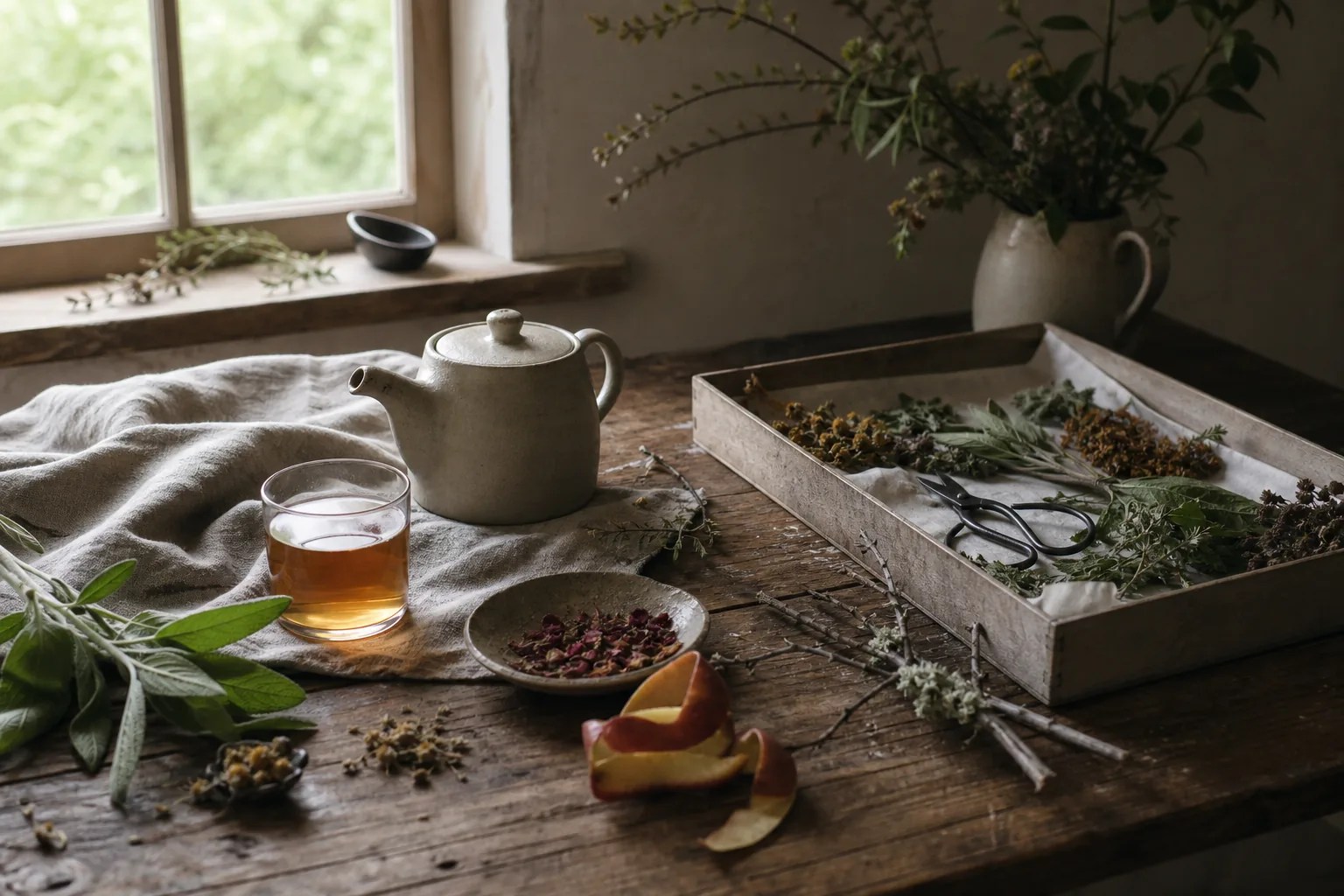
The Botanical Cup · Herbal infusions, kitchen ritual & responsible foraging
Plants in water, approached with wonder and care.
This branch follows herbs, fruits, roots, flowers, leaves, and fungi from kitchen or landscape to a prepared cup. It makes room for folklore, sensory ritual, and seasonal attention while keeping identity, evidence, interactions, permission, and stewardship visible.
Tea properly means Camellia sinensis. These plant drinks are herbal infusions or tisanes. The distinction helps us discuss ingredients accurately without diminishing either tradition.
Being Tea Co provides education, not medical advice, treatment, or positive plant identification. Natural does not mean risk-free. Never ingest a wild plant or fungus from a photograph, app result, common name, or this website alone.
Herbs can cause allergic reactions and interact with medicines. Pregnancy, breastfeeding, childhood, surgery, seizure history, kidney or liver conditions, and other health factors can change what is appropriate. Ask a qualified clinician or pharmacist about your own situation.
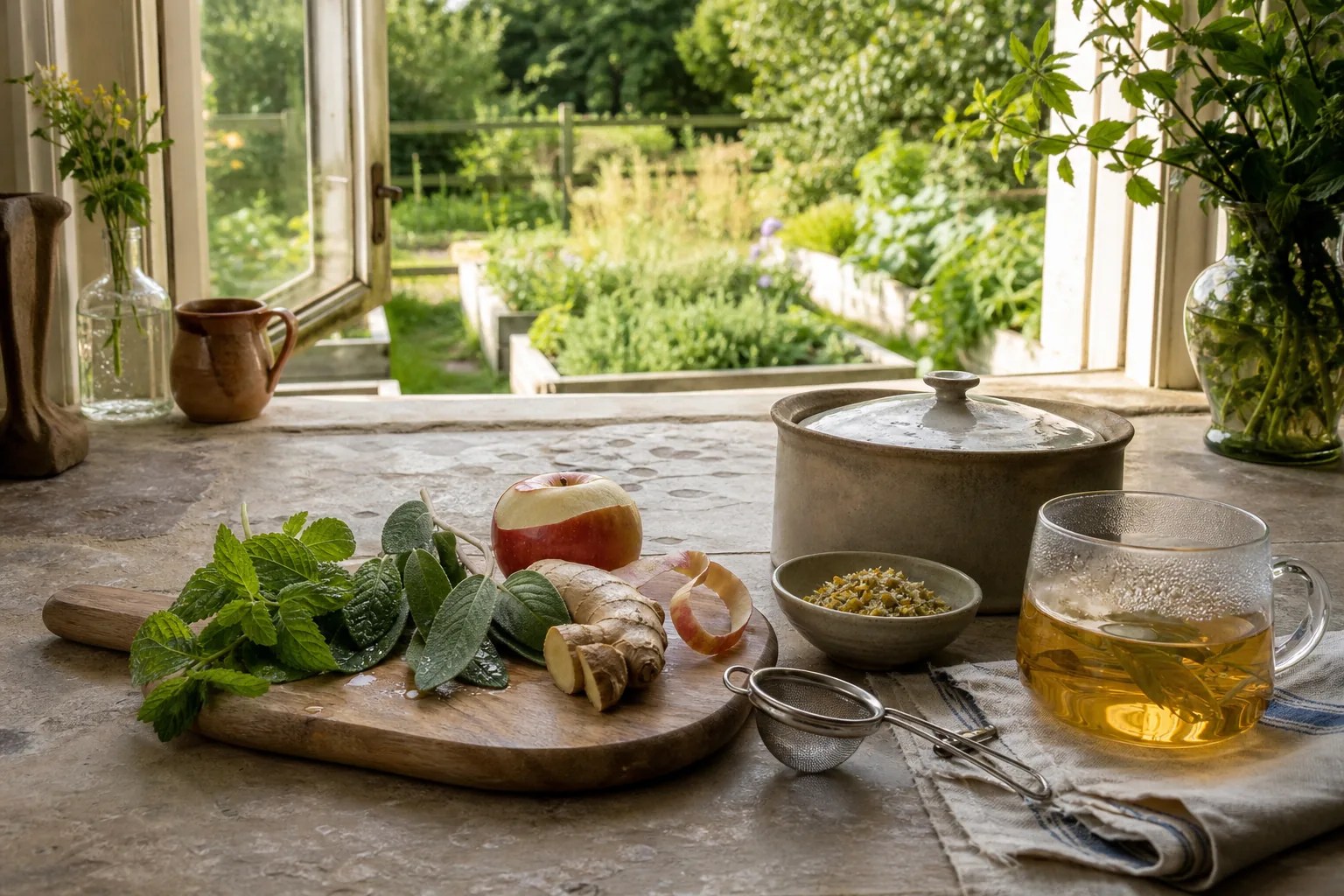
Begin in the kitchen
Use labeled food ingredients such as ginger, culinary sage, peppermint, chamomile, and apple peel.
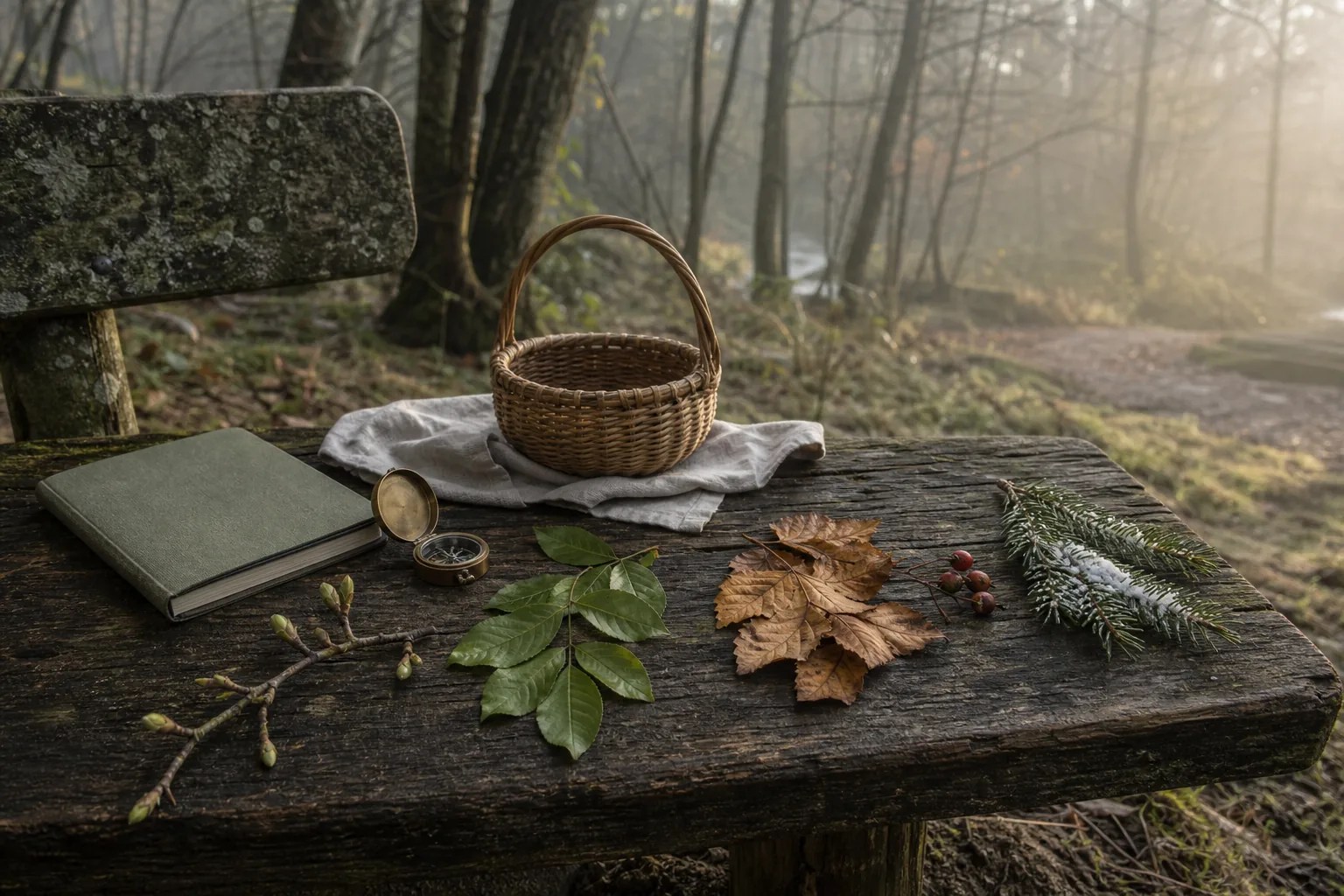
Find a seasonal research lead
Choose local phenological season and a broad region. Results mean possibly in season—not safe to harvest.

Browse every reviewed plant
Thirty-six cited profiles separate kitchen ingredients, guided food plants, purchased-only herbs, and learn-only material.
What “all the plants” means here
This is a completed 36-profile first edition, not a claim to cover every plant on Earth. A plant appears only after its exact species and part, evidence, interactions, lookalikes, source or land rules, and preparation limits have been reviewed. A missing plant means not yet reviewed, never “probably safe.”
Kitchen witchcraft, clearly labeled
The site can explore correspondence, seasonality, gratitude, remembrance, protection, hospitality, and other symbolic practices. Those sections are labeled Kitchen ritual & folklore and kept separate from What the research says. A meaningful ritual does not need a medical claim.
How the seasonal guide works
- Pass through the Before You Forage safety page.
- Choose the season by what local plants are doing—not only the calendar.
- Read the broad regional screening notes.
- Open a complete profile and verify identity, lookalikes, parcel permission, contamination, interactions, and preparation.
- Accept an empty result when the library has no responsibly reviewed beginner lead.
Join the tea table
Receive new brewing guides, cited botanical field notes, and Between Steeps development updates. The newsletter is free and supports a direct relationship between Being Tea Co and its readers.
Unsubscribe at any time. Being Tea Co does not sell contact lists. See the Privacy Policy.
 Being Tea Co