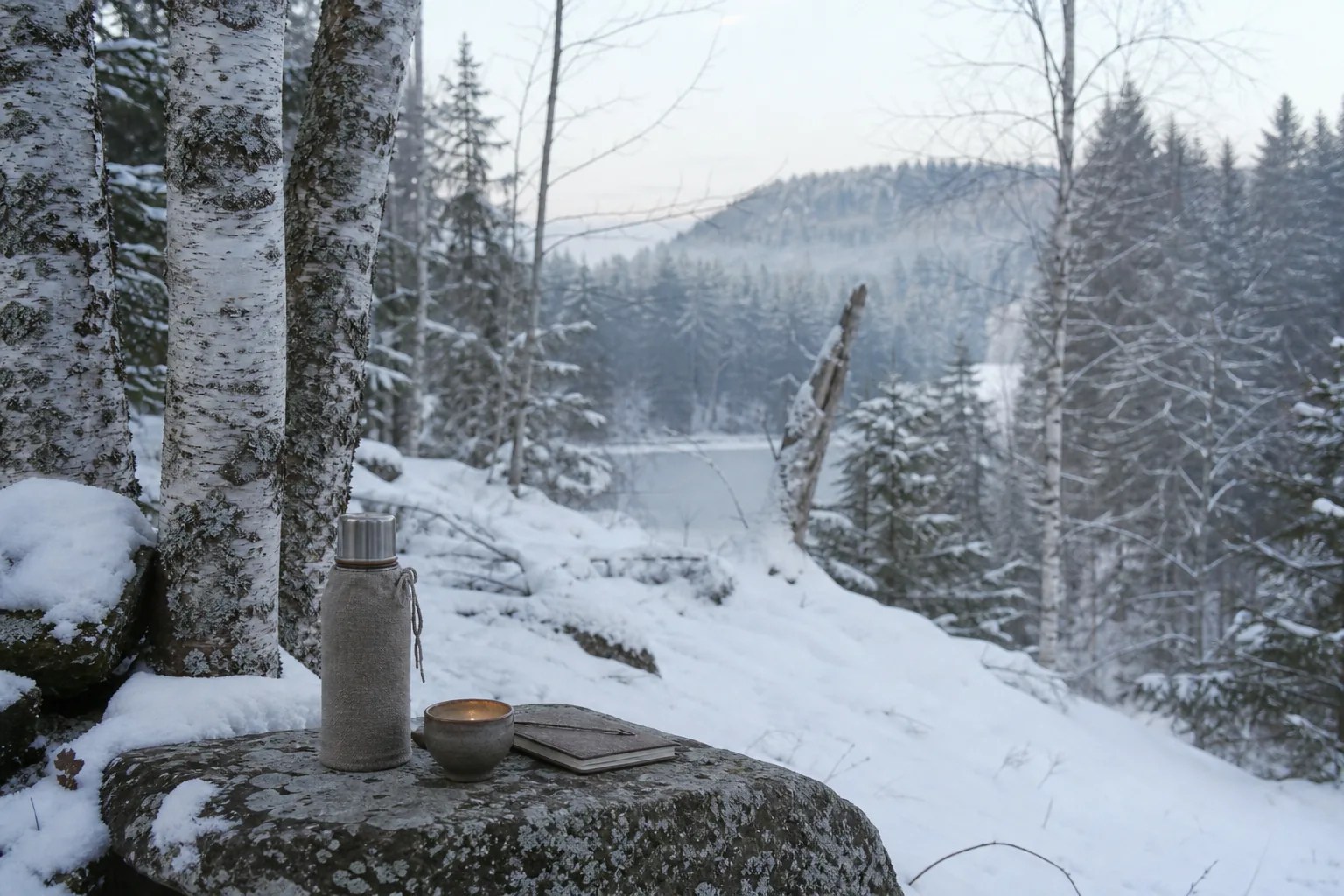
Choose winter when local deciduous plants are dormant, snow or freeze patterns dominate, and only persistent fruit or tree structures remain easy to observe.
Being Tea Co provides education, not medical advice, treatment, or positive plant identification. Natural does not mean risk-free. Never ingest a wild plant or fungus from a photograph, app result, common name, or this website alone.
Herbs can cause allergic reactions and interact with medicines. Pregnancy, breastfeeding, childhood, surgery, seizure history, kidney or liver conditions, and other health factors can change what is appropriate. Ask a qualified clinician or pharmacist about your own situation.
Research lead—not identification, permission, or a safety clearance.
Alaska & Subarctic North
- Squashberry / highbush cranberry — Some fruit may persist, but freezer damage, mold, wildlife need, and species confirmation govern the decision; cook as food. Safety class: Guided food use · cook and strain.
- Woods’ rose hips — Some sound hips may persist, but wildlife need, freezer damage, mold, and fine internal hairs must be evaluated. Safety class: Guided beginner · field identification required.
- Chaga — Easier to observe on birch in winter, but learn-only: no beginner harvest or recipe. Safety class: Learn only · do not self-harvest as a beginner.
Pacific Coast
- No responsibly reviewed wild winter starter lead is published for this broad region yet. Use the kitchen-and-garden library.
Interior West & Southwest
- Woods’ rose hips — Persistent hips may remain at suitable elevations; take nothing from sparse or wildlife-dependent plants. Safety class: Guided beginner · field identification required.
Great Plains & Midwest
- No responsibly reviewed wild winter starter lead is published for this broad region yet. Use the kitchen-and-garden library.
Great Lakes, Northeast & Appalachia
- Eastern white pine — Dormant-season tree structure can support identification study, but the profile is learn-only and warns against deadly yew substitution. Safety class: Learn only · no preparation.
- Chaga — Winter tree structure can support study, but this is learn-only and not a harvest recommendation. Safety class: Learn only · do not self-harvest as a beginner.
Southeast & Gulf Coast
- No responsibly reviewed wild winter starter lead is published for this broad region yet. Use the kitchen-and-garden library.
Before acting on any lead
- Verify the scientific name and exact part with current regional references.
- Confirm at least three positive traits and rule out named lookalikes.
- Check current rules and obtain permission for the exact parcel.
- Exclude contaminated sites and sparse or sensitive populations.
- Review the complete profile’s interaction and preparation sections.
 Being Tea Co