A culturally important eastern tree kept learn-only because deadly yew substitution, geographic mismatch, and unstandardized chemistry outweigh a beginner infusion recipe.
Being Tea Co provides education, not medical advice, treatment, or positive plant identification. Natural does not mean risk-free. Never ingest a wild plant or fungus from a photograph, app result, common name, or this website alone.
Herbs can cause allergic reactions and interact with medicines. Pregnancy, breastfeeding, childhood, surgery, seizure history, kidney or liver conditions, and other health factors can change what is appropriate. Ask a qualified clinician or pharmacist about your own situation.
At a glance
| Scientific name | Pinus strobus |
|---|---|
| Exact part | Needles in historical context—education only |
| Safety class | Learn only · no preparation |
| Source | Observe in range; do not harvest for ingestion |
| Season | Pollen April to June; second-year cones mature August to September |
| Broad region | Eastern North America; not native to Alaska, making an Alaska identification especially suspect |
Research lead—not positive identification or permission to harvest.
Identity
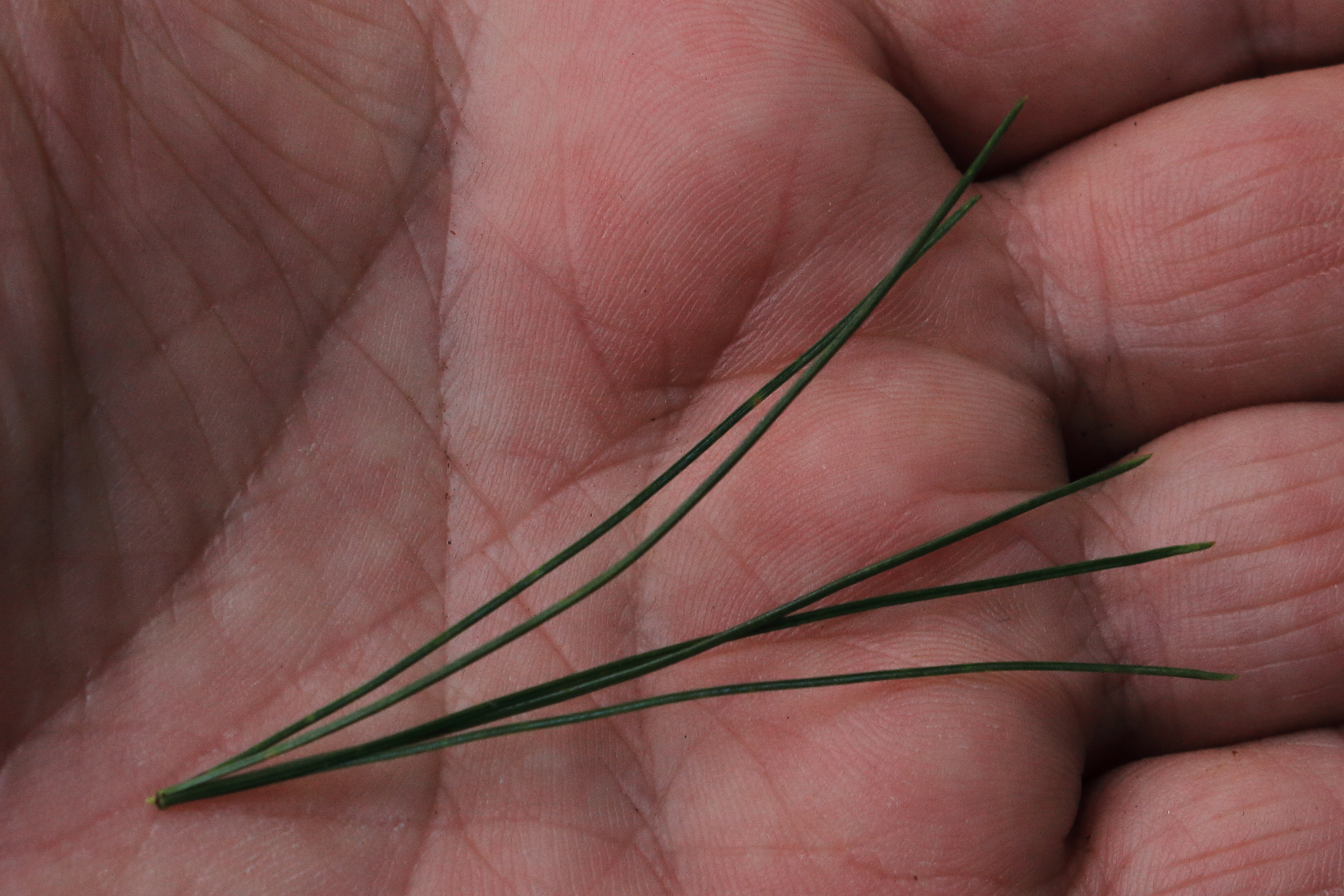
- Long soft flexible blue-green needles occur in bundles of five.
- Branches are arranged in age-related whorls.
- Narrow hanging cones are often curved and have thin scales without sharp prickles.
- Young bark is smooth gray-green; older bark becomes darker, scaly, and deeply furrowed.
Lookalikes and exclusions
Yew can be fatal and has caused poisonings when its needles were brewed. It has flat individual needles and red arils, but one trait is not enough for a beverage decision. Other five-needle pines, ornamentals, hybrids, and sprayed landscape trees add uncertainty.
Do not proceed if
- The scientific name, exact plant part, or maturity stage is uncertain.
- A dangerous or confusing lookalike has not been ruled out with current regional sources.
- The landowner or land manager has not expressly allowed collection.
- The population is sparse, protected, stressed, culturally sensitive, or needed by wildlife.
- Road runoff, spraying, industrial history, pet waste, polluted water, mold, or other contamination is possible.
- Your allergy, pregnancy, breastfeeding, childhood, surgery, health-condition, or medication questions have not been resolved.
Where and when
Eastern white pine ranges from Newfoundland toward southeastern Manitoba, the Great Lakes, Atlantic states, and Appalachians. A supposed wild Alaska specimen is likely a different conifer or planting.
Harvest ethics
This page encourages observation only. Do not strip foliage from young trees, collect from landscaping, or turn culturally documented use into casual commodity advice.
Culinary and traditional context
Indigenous communities have documented uses of eastern white pine material. Attribute a practice to its community and source; ethnobotanical record is not a standardized consumer recipe.
What the research can—and cannot—say
No adequate human clinical evidence for a Pinus strobus needle infusion was located. Studies of Korean pine or another species cannot be transferred, and variable vitamin content does not make an unmeasured cup a dependable supplement.
Side effects and interactions
- The decisive risk is lethal species substitution.
- Correct identification does not resolve dose, contaminants, or chemical variability.
- Pregnancy, breastfeeding, childhood, conifer allergy or asthma, kidney or liver disease, and medicines heighten uncertainty.
- Do not ingest pine essential oil or material from an ornamental or sprayed site.
Preparation
No recipe, dose, essential oil, vitamin-C claim, or pregnancy-safe workaround is published. Learn the tree in its ecology and use a different, verified kitchen ingredient for the cup.
Kitchen ritual & folklore
Five-needle bundles can be studied through drawing, touch with permission, or a fallen branch. Observation is enough; a tree does not owe the visitor a drink.
Folklore and personal ritual are presented as cultural or reflective practices. They are not evidence that an ingredient changes physiology, treats illness, predicts events, or is safe for a particular person.
Sources and review
- US Forest Service: Pinus strobus Species Review
- Michigan DNR: Eastern White Pine Identification
- National Park Service: Eastern White Pine
- Poison Control: Yew Needle and Berry Poisoning
- PubMed: Pinus Ethnopharmacology and Evidence Gaps
Editorial safety review: July 29, 2026. Re-check linked sources, local rules, and product labels before use; evidence and regulations change.
 Being Tea Co
