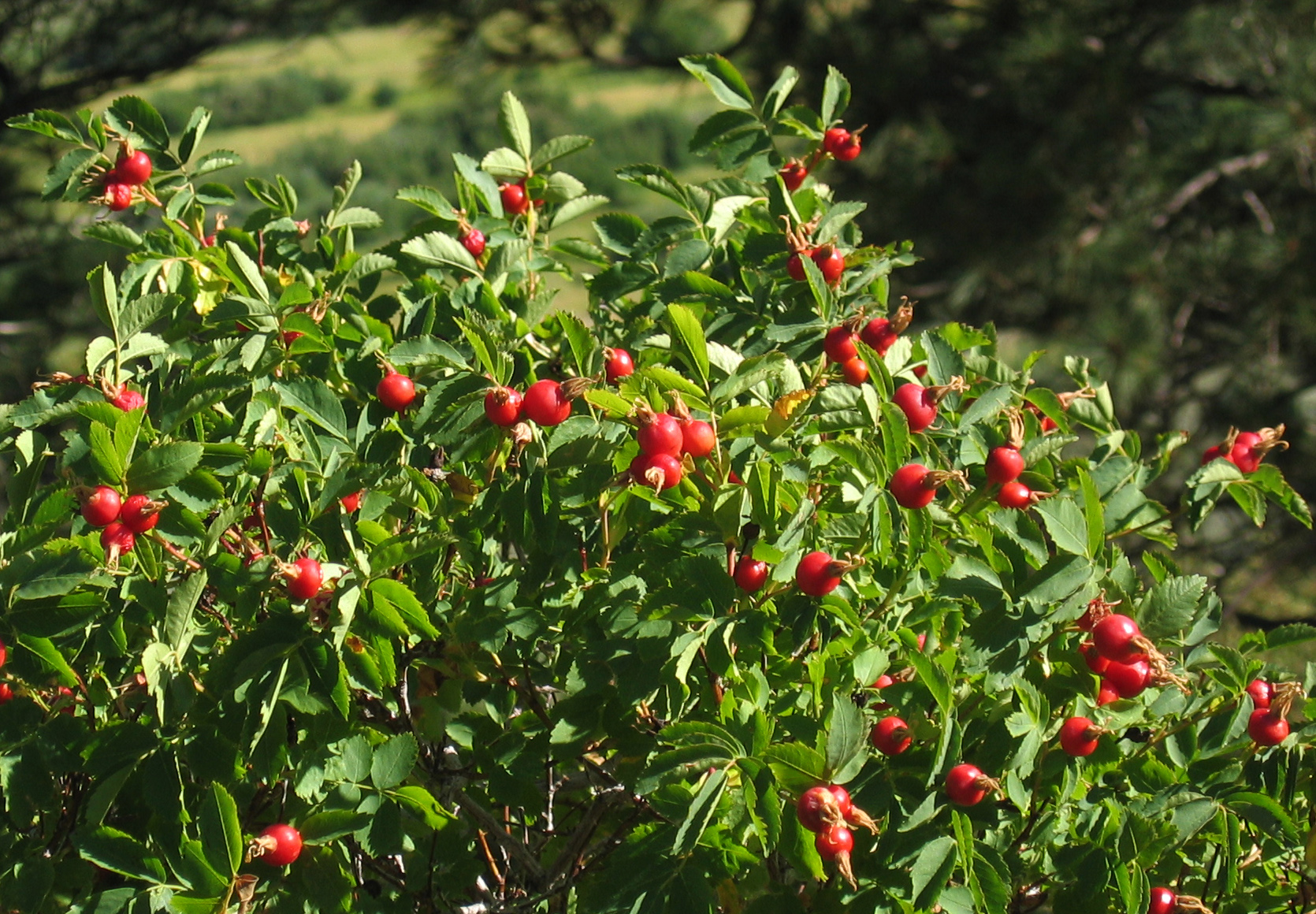
A tart seasonal food with fine internal hairs that demand careful preparation and a shrub best confirmed while flowering.
Being Tea Co provides education, not medical advice, treatment, or positive plant identification. Natural does not mean risk-free. Never ingest a wild plant or fungus from a photograph, app result, common name, or this website alone.
Herbs can cause allergic reactions and interact with medicines. Pregnancy, breastfeeding, childhood, surgery, seizure history, kidney or liver conditions, and other health factors can change what is appropriate. Ask a qualified clinician or pharmacist about your own situation.
At a glance
| Scientific name | Rosa woodsii |
|---|---|
| Exact part | Fully ripe orange-red hip; internal hairs removed or finely strained |
| Safety class | Guided beginner · field identification required |
| Source | Known unsprayed shrub with permission |
| Season | Late summer through autumn; some hips persist into winter |
| Broad region | Western and central North America into Alaska and Canada |
Research lead—not positive identification or permission to harvest.
Identity
- Confirm the shrub while it is flowering because wild roses hybridize and fruit-only identification is less reliable.
- Use fully colored, sound hips from a known unsprayed plant.
- Record the scientific name, exact site, flower traits, leaves, prickles, and fruit before considering harvest.
Lookalikes and exclusions
Ornamental roses may be sprayed, and different rose species or hybrids can be hard to separate. A red fruit alone is not enough.
Do not proceed if
- The scientific name, exact plant part, or maturity stage is uncertain.
- A dangerous or confusing lookalike has not been ruled out with current regional sources.
- The landowner or land manager has not expressly allowed collection.
- The population is sparse, protected, stressed, culturally sensitive, or needed by wildlife.
- Road runoff, spraying, industrial history, pet waste, polluted water, mold, or other contamination is possible.
- Your allergy, pregnancy, breastfeeding, childhood, surgery, health-condition, or medication questions have not been resolved.
Where and when
Range maps indicate where Rosa woodsii may occur, not that every local rose is that species. Ripening follows local frost, rainfall, latitude, and elevation.
Harvest ethics
Leave most hips for birds, mammals, seed, and winter color. Take a small amount from abundant plants only, never from a sparse population.
Culinary and traditional context
Rose hips have many food traditions. Name the particular regional or cultural source when describing one, and avoid turning variable nutrient content into an “immune-boosting” promise.
What the research can—and cannot—say
Treat the hip as a tart food. Vitamin C and other compounds vary with species, ripeness, drying, storage, and heat, so a homemade cup is not a standardized supplement.
Side effects and interactions
- Fine hairs surrounding the seeds can irritate the mouth and digestive tract.
- Avoid sprayed plants and fruit with mold or animal contamination.
- Food allergy, pregnancy, medical conditions, and medicines may require individual guidance.
Preparation
Purchased, seeded, cut-and-sifted rose hips are the beginner option. For a locally verified harvest, wash, split, remove seeds and hairs, then dry safely or use promptly. UAF’s food-preservation guide starts with about 1 teaspoon crushed dried hip per teapot, covered with boiling water for 5–10 minutes. Strain finely and begin modestly.
Kitchen ritual & folklore
Rose hips can mark persistence into colder weather. Leave an abundant share on the shrub; restraint is part of the ritual.
Folklore and personal ritual are presented as cultural or reflective practices. They are not evidence that an ingredient changes physiology, treats illness, predicts events, or is safe for a particular person.
Sources and review
- US Forest Service: Woods’ Rose
- University of Alaska Fairbanks Extension: Wild Roses and Rose-Hip Tea
- US Forest Service: Rose Genus and Rose-Hip Context
Editorial safety review: July 29, 2026. Re-check linked sources, local rules, and product labels before use; evidence and regulations change.
 Being Tea Co
