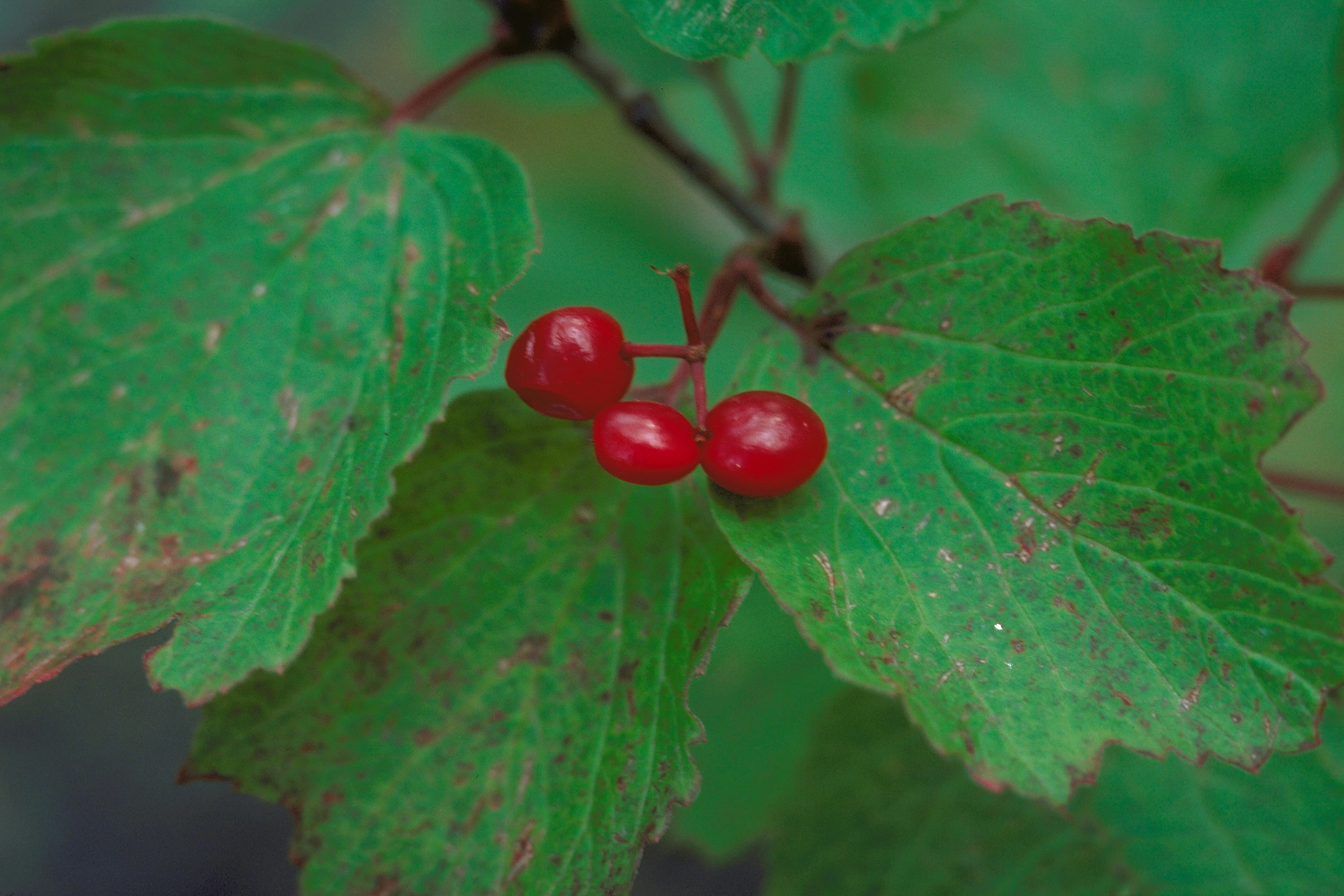
A tart northern fruit that is not a true cranberry and must be separated from other viburnums, red elderberry, and poisonous red baneberry.
Being Tea Co provides education, not medical advice, treatment, or positive plant identification. Natural does not mean risk-free. Never ingest a wild plant or fungus from a photograph, app result, common name, or this website alone.
Herbs can cause allergic reactions and interact with medicines. Pregnancy, breastfeeding, childhood, surgery, seizure history, kidney or liver conditions, and other health factors can change what is appropriate. Ask a qualified clinician or pharmacist about your own situation.
At a glance
| Scientific name | Viburnum edule |
|---|---|
| Exact part | Fully ripe orange-red to red fruit |
| Safety class | Guided food use · cook and strain |
| Source | Expert-confirmed, permitted clean site or traceable food product |
| Season | Fruit ripens generally August through October and may persist |
| Broad region | Alaska, Canada, northern United States, and parts of the Rocky Mountains |
Research lead—not positive identification or permission to harvest.
Identity
- A deciduous several-stemmed shrub with smooth gray bark.
- Opposite simple leaves are broadly oval, shallowly three-lobed, and sharply toothed.
- Milky-white flowers occur in relatively small terminal clusters.
- Round to slightly egg-shaped orange-red or red fruit contains one flattened seed.
Lookalikes and exclusions
Other Viburnum species are not automatically interchangeable. Red elderberry has compound leaves and many-fruited panicles. Poisonous red baneberry is an herb rather than a woody shrub. A red fruit cluster without leaf, stem, flower, and habitat evidence is insufficient.
Do not proceed if
- The scientific name, exact plant part, or maturity stage is uncertain.
- A dangerous or confusing lookalike has not been ruled out with current regional sources.
- The landowner or land manager has not expressly allowed collection.
- The population is sparse, protected, stressed, culturally sensitive, or needed by wildlife.
- Road runoff, spraying, industrial history, pet waste, polluted water, mold, or other contamination is possible.
- Your allergy, pregnancy, breastfeeding, childhood, surgery, health-condition, or medication questions have not been resolved.
Where and when
Squashberry favors moist woods, forest openings, stream or lake margins, and bog margins across northern regions. Wet habitat can also carry polluted water or access restrictions.
Harvest ethics
Confirm the land manager, pick only ripe fruit, leave most for wildlife and local or subsistence harvesters, and avoid breaking current-year wood. One-third of available fruit is an absolute ceiling, not a target.
Culinary and traditional context
The fruit has documented northern food use. Attribute recipes or stories to the named community or regional source and present the fruit as food rather than medicine.
What the research can—and cannot—say
No qualifying human clinical trial of Viburnum edule for a therapeutic indication was located. Its food history does not justify disease-prevention or treatment claims.
Side effects and interactions
- Food allergy is possible.
- Very tart fruit may aggravate reflux or a sensitive stomach.
- Discard green, spoiled, moldy, or contaminated fruit.
- No established medication interaction was located for ordinary food use; concentrated extracts remain unstudied and are not recommended.
Preparation
Use only fully ripe expert-confirmed fruit. Wash, cook as a food, and strain out the flattened seed. A spoonful of a properly prepared sauce or preserve may be diluted into hot water as a tart food beverage. Use tested guidance for shelf-stable canning.
Kitchen ritual & folklore
Bright fruit persisting into cold weather can mark provision and shared abundance. Leave the majority on the shrub before preparing anything for the table.
Folklore and personal ritual are presented as cultural or reflective practices. They are not evidence that an ingredient changes physiology, treats illness, predicts events, or is safe for a particular person.
Sources and review
- US Forest Service: Viburnum edule Species Review
- US Forest Service: Browse-Shrub Seed Handbook
- US Forest Service: Alaska Subsistence-Use Plant Review
- Alaska DNR: Non-Timber Harvest Manual
- Denali National Park: Berry Safety and Personal Use
Editorial safety review: July 29, 2026. Re-check linked sources, local rules, and product labels before use; evidence and regulations change.
 Being Tea Co
