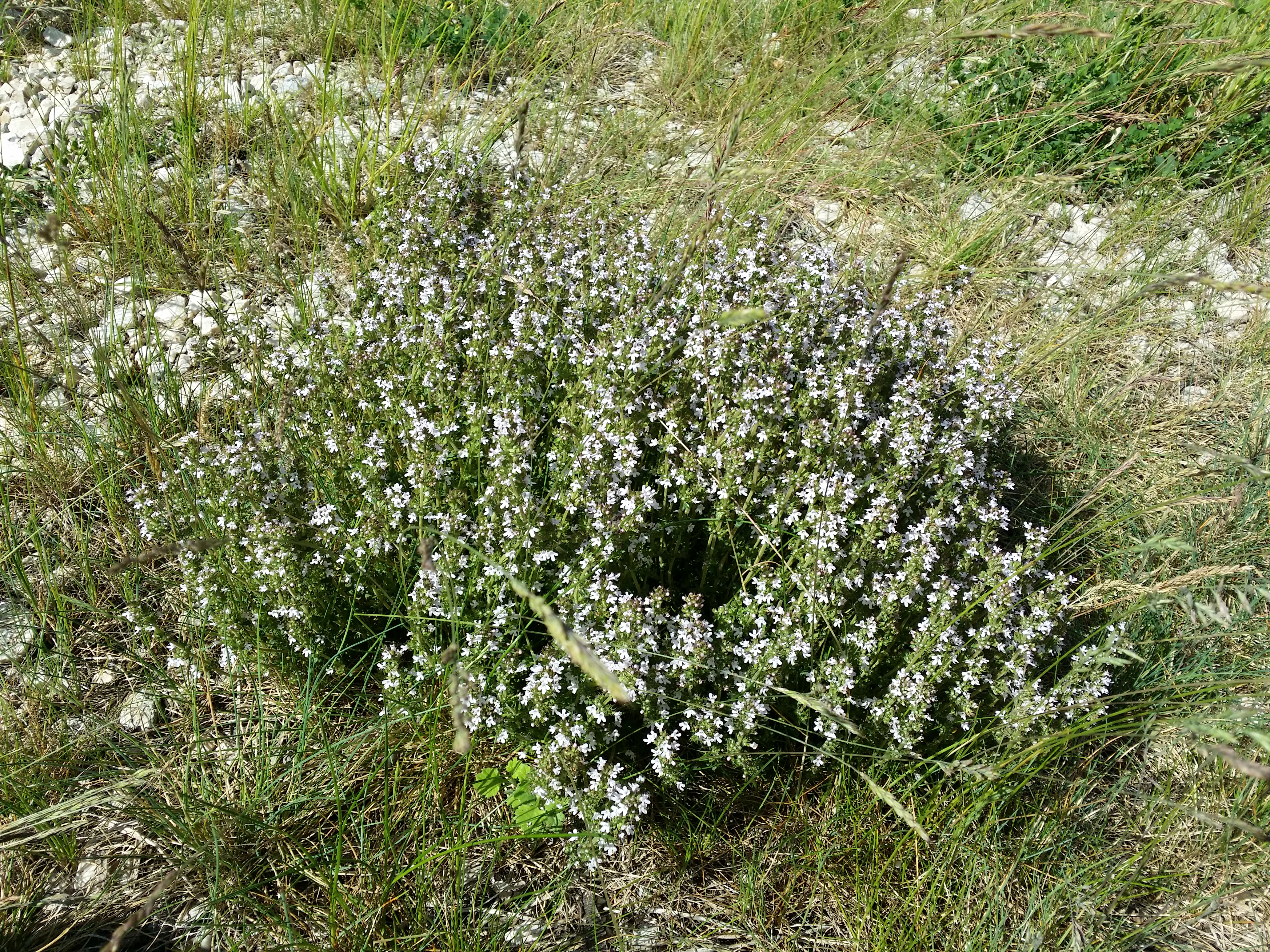
A familiar Mediterranean culinary herb whose productive-cough use is recognized by European regulators as traditional—not clinically proven—and whose essential oil does not belong in a home cup.
Being Tea Co provides education, not medical advice, treatment, or positive plant identification. Natural does not mean risk-free. Never ingest a wild plant or fungus from a photograph, app result, common name, or this website alone.
Herbs can cause allergic reactions and interact with medicines. Pregnancy, breastfeeding, childhood, surgery, seizure history, kidney or liver conditions, and other health factors can change what is appropriate. Ask a qualified clinician or pharmacist about your own situation.
At a glance
| Scientific name | Thymus vulgaris L. |
|---|---|
| Exact part | Labeled culinary leaf and tender flowering top |
| Safety class | Starter kitchen · buy or grow |
| Source | Labeled common-thyme plant or single-ingredient culinary herb |
| Season | Fresh through the growing season; dried year-round |
| Broad region | Native to southwestern Europe and southeastern Italy; cultivated widely in temperate gardens |
Research lead—not positive identification or permission to harvest.
Identity
- Use a label that states Thymus vulgaris. The EMA medicinal monograph also covers T. zygis, but this profile does not treat all thymes as interchangeable.
- Common thyme is a small woody-based aromatic subshrub with opposite tiny leaves and small two-lipped flowers in terminal or axillary clusters.
- Use clean leaf and tender flowering top from an unsprayed known plant or a packaged food ingredient.
- Thyme essential oil, thymol concentrate, tincture, and combination cough products are different preparations and excluded from this house-cup guide.
Lookalikes and exclusions
Lemon thyme hybrids, creeping thymes, savory, oregano, and other small-leaved mint-family herbs can resemble common thyme. A pleasant “thyme-like” odor does not make an unknown garden or wild plant T. vulgaris.
Do not proceed if
- The scientific name, exact plant part, or maturity stage is uncertain.
- A dangerous or confusing lookalike has not been ruled out with current regional sources.
- The landowner or land manager has not expressly allowed collection.
- The population is sparse, protected, stressed, culturally sensitive, or needed by wildlife.
- Road runoff, spraying, industrial history, pet waste, polluted water, mold, or other contamination is possible.
- Your allergy, pregnancy, breastfeeding, childhood, surgery, health-condition, or medication questions have not been resolved.
Where and when
Grow from labeled seed or a nursery start in a sunny, well-drained bed or pot, or buy culinary dried leaf. Do not gather from landscaping, roadsides, or an unlabeled thyme groundcover.
Harvest ethics
Clip a few nonwoody tips while leaving most flowering growth for bees and enough foliage for the plant. Avoid cutting into old wood, and dry only clean, correctly labeled material.
Culinary and traditional context
Thyme has Mediterranean culinary histories and long-standing European use in preparations for chesty coughs. EMA’s conclusion for cough is explicitly based on traditional use; it is not a finding that a kitchen cup cures a cold, bronchitis, or infection.
What the research can—and cannot—say
Clinical research often studies thyme combined with ivy or primrose, extracts, syrups, or capsules. A 2023 student trial tested 500 mg leaf capsules twice daily for mood and memory outcomes, not a culinary infusion. Those results cannot be transferred to a house cup or used to claim treatment.
Side effects and interactions
- Mint-family hypersensitivity can cause rash, swelling, breathing symptoms, or rarely a severe allergic reaction. Stomach cramps, nausea, or vomiting have also been reported with medicinal preparations.
- Pregnancy and breastfeeding safety for medicinal use is not established; EMA does not recommend such use when data are insufficient.
- EMA reported no medicine interactions at the time of its assessment, but that means none were reported—not that interaction studies proved none exist. Review repeated medicinal use with a pharmacist.
- Do not ingest thyme essential oil or substitute drops of oil for leaf.
- Shortness of breath, fever, bloody or pus-like sputum, worsening symptoms, or a cough lasting beyond a week needs medical assessment rather than a stronger infusion.
Preparation
House cup: use package directions or start with 1 teaspoon loosely filled dried T. vulgaris leaf—or two small fresh sprigs—in 300 mL just-boiled water. Cover 5–7 minutes and strain. This modest culinary cup is below a treatment claim and is not a substitute for cough care.
Kitchen ritual & folklore
A clipped garden sprig can symbolize steadiness, courage, or household care in personal practice. Keep “clearing” language symbolic; do not recast it as killing pathogens or clearing the lungs.
Folklore and personal ritual are presented as cultural or reflective practices. They are not evidence that an ingredient changes physiology, treats illness, predicts events, or is safe for a particular person.
Sources and review
- European Medicines Agency: Thyme Herb Overview and Monograph
- European Medicines Agency: Final Thyme Herb Monograph
- Kew Plants of the World Online: Thymus vulgaris
- PubMed: Randomized Trial of Thyme Leaf Capsules in Students
- PubMed: Systematic Review of Herbal Medicines for Cough
Editorial safety review: July 29, 2026. Re-check linked sources, local rules, and product labels before use; evidence and regulations change.
 Being Tea Co
