A leaf—not a berry tea—whose labor and “uterine tonic” reputation rests on limited, uncertain evidence and requires especially careful pregnancy and medication guidance.
Being Tea Co provides education, not medical advice, treatment, or positive plant identification. Natural does not mean risk-free. Never ingest a wild plant or fungus from a photograph, app result, common name, or this website alone.
Herbs can cause allergic reactions and interact with medicines. Pregnancy, breastfeeding, childhood, surgery, seizure history, kidney or liver conditions, and other health factors can change what is appropriate. Ask a qualified clinician or pharmacist about your own situation.
At a glance
| Scientific name | Rubus idaeus L. |
|---|---|
| Exact part | Dried, cut leaf; fruit and flavoring excluded |
| Safety class | Purchased adult infusion · no self-directed pregnancy or lactation use |
| Source | Single-ingredient product naming Rubus idaeus leaf |
| Season | Commercial dried leaf year-round; garden leaves grow spring through autumn |
| Broad region | Native across much of the temperate Northern Hemisphere, including Alaska |
Research lead—not positive identification or permission to harvest.
Identity
- This profile concerns the dried leaf of Rubus idaeus, not raspberry fruit, “raspberry-flavored” tea, stems, roots, or another blackberry or raspberry species.
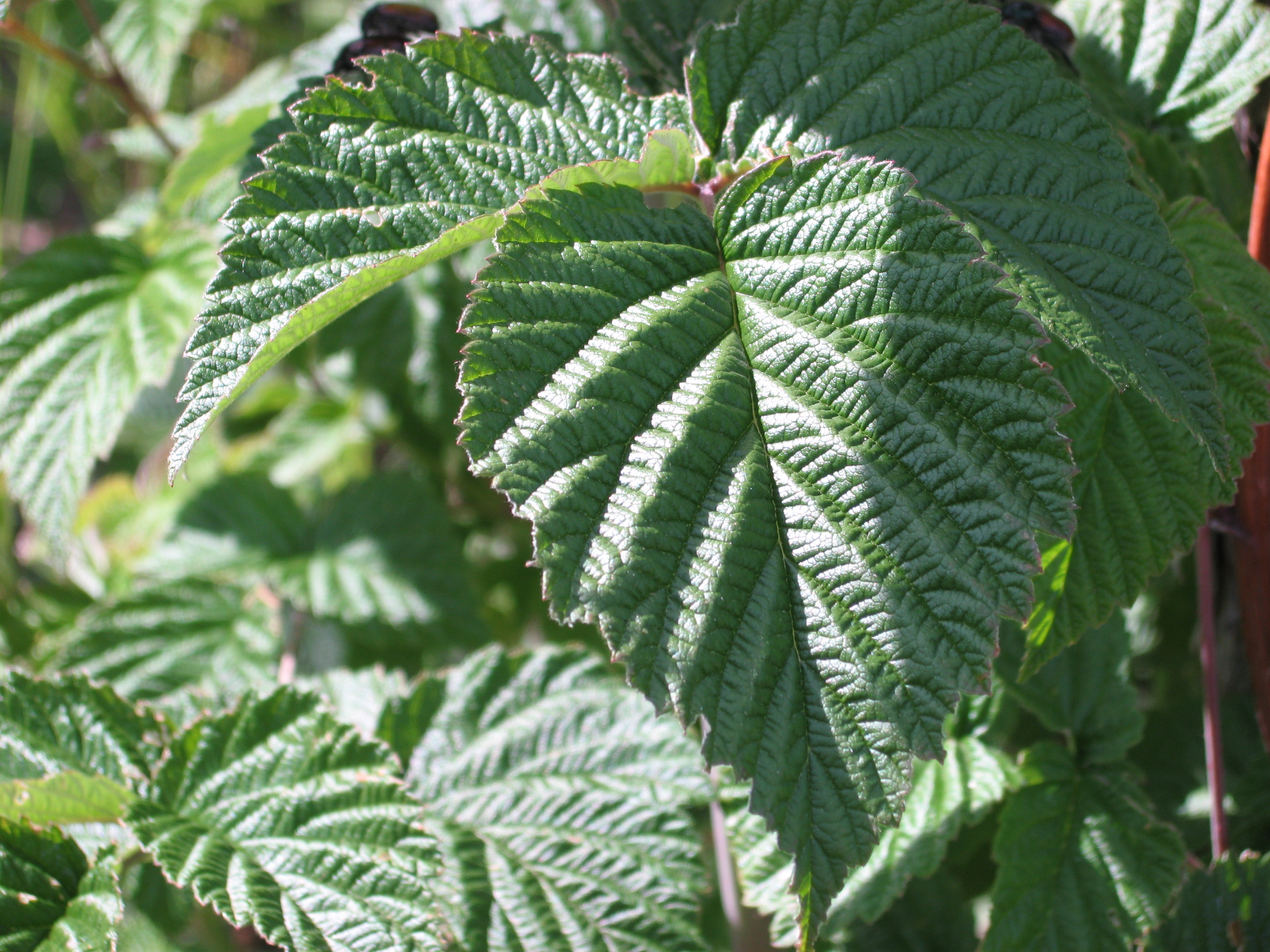
- Leaves are usually compound with three to five toothed leaflets and a pale, often softly hairy underside, but cultivated brambles hybridize and field identification is not the sourcing method.
- The EMA monograph concerns dried, comminuted leaf and specific dry extracts; tablets, tinctures, loose leaf, and flavored blends are not automatically equivalent.
- Use a sealed product that states R. idaeus, leaf, amount, full ingredients, lot, and directions. A fruit picture on the box does not establish that the leaf is present.
Lookalikes and exclusions
Many Rubus species and hybrids have prickly canes and compound leaves. Berry flavorings may contain no raspberry leaf, while “pregnancy tea” blends may add nettle, licorice, red clover, or other herbs with separate cautions. This page is not a wild-bramble identification guide.
Do not proceed if
- The scientific name, exact plant part, or maturity stage is uncertain.
- A dangerous or confusing lookalike has not been ruled out with current regional sources.
- The landowner or land manager has not expressly allowed collection.
- The population is sparse, protected, stressed, culturally sensitive, or needed by wildlife.
- Road runoff, spraying, industrial history, pet waste, polluted water, mold, or other contamination is possible.
- Your allergy, pregnancy, breastfeeding, childhood, surgery, health-condition, or medication questions have not been resolved.
Where and when
Use a labeled cultivated product. Do not gather leaves from an unknown bramble, sprayed garden, roadside, or land without permission; fruit edibility does not prove that the leaf product matches the studied species or preparation.
Harvest ethics
Prefer cultivated leaf with traceable species and residue testing. Leave wild bramble foliage for the plant and its habitat, and do not market a pregnancy tradition by promising an easier or shorter birth.
Culinary and traditional context
Raspberry leaf has traditional uses for menstrual discomfort, mild diarrhea, and mouth or throat inflammation and is popularly promoted in pregnancy. EMA’s conclusions for the first group are based on long-standing use, while pregnancy claims require separate evidence and should not be treated as inherited certainty.
What the research can—and cannot—say
Evidence for labor benefits is weak. A randomized trial of 192 low-risk first-time mothers used 2.4 g of tablets daily from 32 weeks and found no significant overall relationship with birth outcomes or shortening of first-stage labor; that tablet trial does not validate tea in every pregnancy. NIH says pregnancy benefit evidence is very limited and safety is not well studied. The UK Committee on Toxicity judged risk low but uncertainty high.
Side effects and interactions
- Do not self-start raspberry leaf during pregnancy or breastfeeding. EMA does not recommend medicinal use because safety data are insufficient; the UK COT’s “low risk” conclusion explicitly carries high uncertainty.
- A published case associated raspberry-leaf tea with hypoglycemia and reduced insulin requirements in gestational diabetes. Anyone using insulin or glucose-lowering medicine needs obstetric and diabetes-team guidance.
- Labor contractions, bleeding, reduced fetal movement, severe pain, or concern about labor require immediate maternity advice—not a tea adjustment.
- Laboratory evidence suggests possible CYP1A2, CYP2D6, and CYP3A4 inhibition, but clinical relevance is unknown. Review regular use with a pharmacist when taking medicines, especially those with a narrow therapeutic range.
- Tannins might affect iron absorption, but direct evidence for raspberry-leaf tea is lacking. Do not use the possibility as a substitute for anemia testing or prenatal guidance.
- Stop for allergy, persistent gastrointestinal symptoms, or any unexpected change and report the full product and dose to the clinician.
Preparation
For a nonpregnant, nonbreastfeeding adult, use only a single-ingredient R. idaeus leaf product and follow its label for one ordinary cup. The site publishes no pregnancy timetable, labor-induction recipe, medicinal dose, tincture, or concentrated extract. Pregnancy or lactation use belongs in an individualized conversation with an obstetric clinician or midwife who knows the medicines and pregnancy history.
Kitchen ritual & folklore
The leaf can invite reflection on care, lineage, or readiness. Keep the symbolism gentle and private; it must never become a promise of easier labor, hormonal balance, fertility, or a safer birth.
Folklore and personal ritual are presented as cultural or reflective practices. They are not evidence that an ingredient changes physiology, treats illness, predicts events, or is safe for a particular person.
Sources and review
- NIH Office of Dietary Supplements: Pregnancy Fact Sheet
- European Medicines Agency: Raspberry Leaf
- UK Committee on Toxicity: Raspberry Leaf Pregnancy Conclusion
- Royal Botanic Gardens, Kew: Rubus idaeus
- PubMed: Randomized Raspberry-Leaf Labor Trial
- PubMed: Raspberry Leaf and Gestational-Diabetes Hypoglycemia
Editorial safety review: July 29, 2026. Re-check linked sources, local rules, and product labels before use; evidence and regulations change.
 Being Tea Co
