A familiar forage plant whose inconsistent menopause research uses standardized products that cannot be translated into an unmeasured wild infusion.
Being Tea Co provides education, not medical advice, treatment, or positive plant identification. Natural does not mean risk-free. Never ingest a wild plant or fungus from a photograph, app result, common name, or this website alone.
Herbs can cause allergic reactions and interact with medicines. Pregnancy, breastfeeding, childhood, surgery, seizure history, kidney or liver conditions, and other health factors can change what is appropriate. Ask a qualified clinician or pharmacist about your own situation.
At a glance
| Scientific name | Trifolium pratense |
|---|---|
| Exact part | Flower heads or flowering tops—education only |
| Safety class | Learn only · no home medicinal preparation |
| Source | Observe cultivated plants or review standardized-product research |
| Season | Flowers mainly late spring through early summer, sometimes again later |
| Broad region | Introduced and naturalized widely across North America |
Research lead—not positive identification or permission to harvest.
Identity
- Erect or ascending hairy stems are often hollow.
- Each leaf has three oval or oblong leaflets, usually marked with a pale V-shaped chevron.
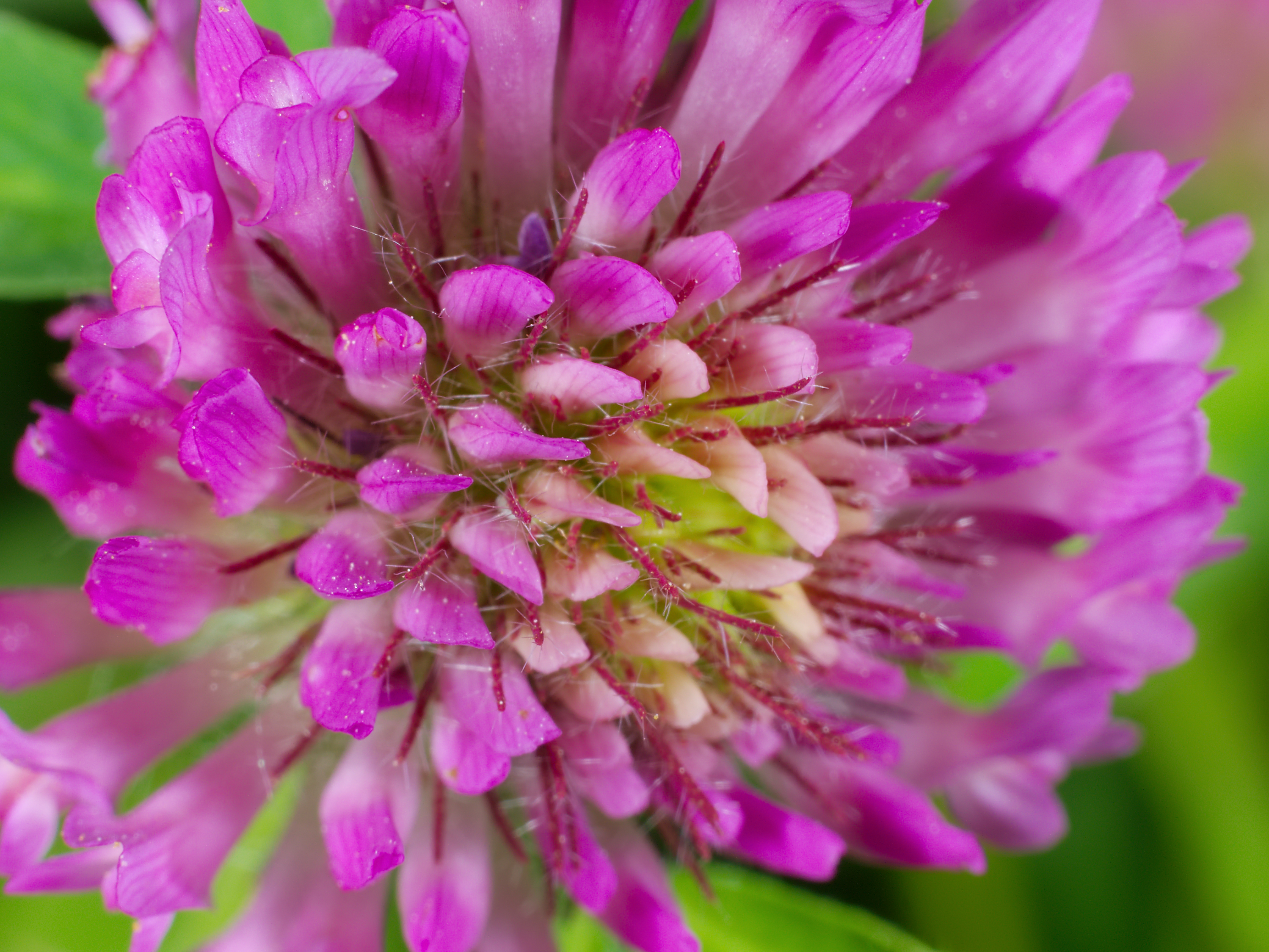
- Dense round or ovoid rose-pink heads contain many pea-shaped florets.
- A flowering whole plant is required; there is no dependable “safe trifoliate leaf” rule.
Lookalikes and exclusions
White clover creeps and has white heads; alsike clover often lacks the pale chevron; sweetclovers have long narrow white or yellow racemes. Unflowered legumes should not be selected for ingestion from leaf shape alone.
Do not proceed if
- The scientific name, exact plant part, or maturity stage is uncertain.
- A dangerous or confusing lookalike has not been ruled out with current regional sources.
- The landowner or land manager has not expressly allowed collection.
- The population is sparse, protected, stressed, culturally sensitive, or needed by wildlife.
- Road runoff, spraying, industrial history, pet waste, polluted water, mold, or other contamination is possible.
- Your allergy, pregnancy, breastfeeding, childhood, surgery, health-condition, or medication questions have not been resolved.
Where and when
Red clover is commonly planted as forage and occurs in fields, lawns, roadsides, and cool moist disturbed sites. Presence in a field does not grant permission or show that pesticides were not used.
Harvest ethics
Never collect from a crop or livestock field without the grower’s permission. Leave ample heads for bumblebees and other pollinators and avoid transporting seed.
Culinary and traditional context
Red clover appears in folk and commercial menopause traditions. Cultural history and current product marketing should be described separately from evidence for a specific standardized extract.
What the research can—and cannot—say
NCCIH describes human evidence for menopause and other uses as inconsistent or inconclusive. A 12-month randomized trial found red clover no better than placebo for hot flashes. Those products were not equivalent to a home infusion.
Side effects and interactions
- Avoid medicinal use during pregnancy and breastfeeding.
- Breast-cancer history or risk, hormone-sensitive or gynecologic disease, hormone-replacement therapy, tamoxifen, or other estrogen-active treatment require clinical review.
- A bleeding interaction with anticoagulant or antiplatelet medicines is often proposed but is poorly characterized; treat it as a precaution, not a proven effect.
- Standardized isoflavone extracts and wild flower tea have different and unmeasured exposure.
Preparation
No home medicinal tea, tincture, dose, or extract is published. Ordinary cultivated-food context may be discussed, but the site does not turn a standardized-extract trial into a wild recipe.
Kitchen ritual & folklore
Three leaflets and a pink head can symbolize reciprocity or community. Let the observation stand without hormone-balancing or menopause-treatment claims.
Folklore and personal ritual are presented as cultural or reflective practices. They are not evidence that an ingredient changes physiology, treats illness, predicts events, or is safe for a particular person.
Sources and review
- USDA NRCS: Red Clover Plant Guide
- Penn State Extension: Red Clover Identification
- NCCIH: Red Clover Evidence and Safety
- Health Canada: Red Clover Isoflavone Extract Monograph
- PubMed: Randomized 12-Month Red Clover Trial
Editorial safety review: July 29, 2026. Re-check linked sources, local rules, and product labels before use; evidence and regulations change.
 Being Tea Co
