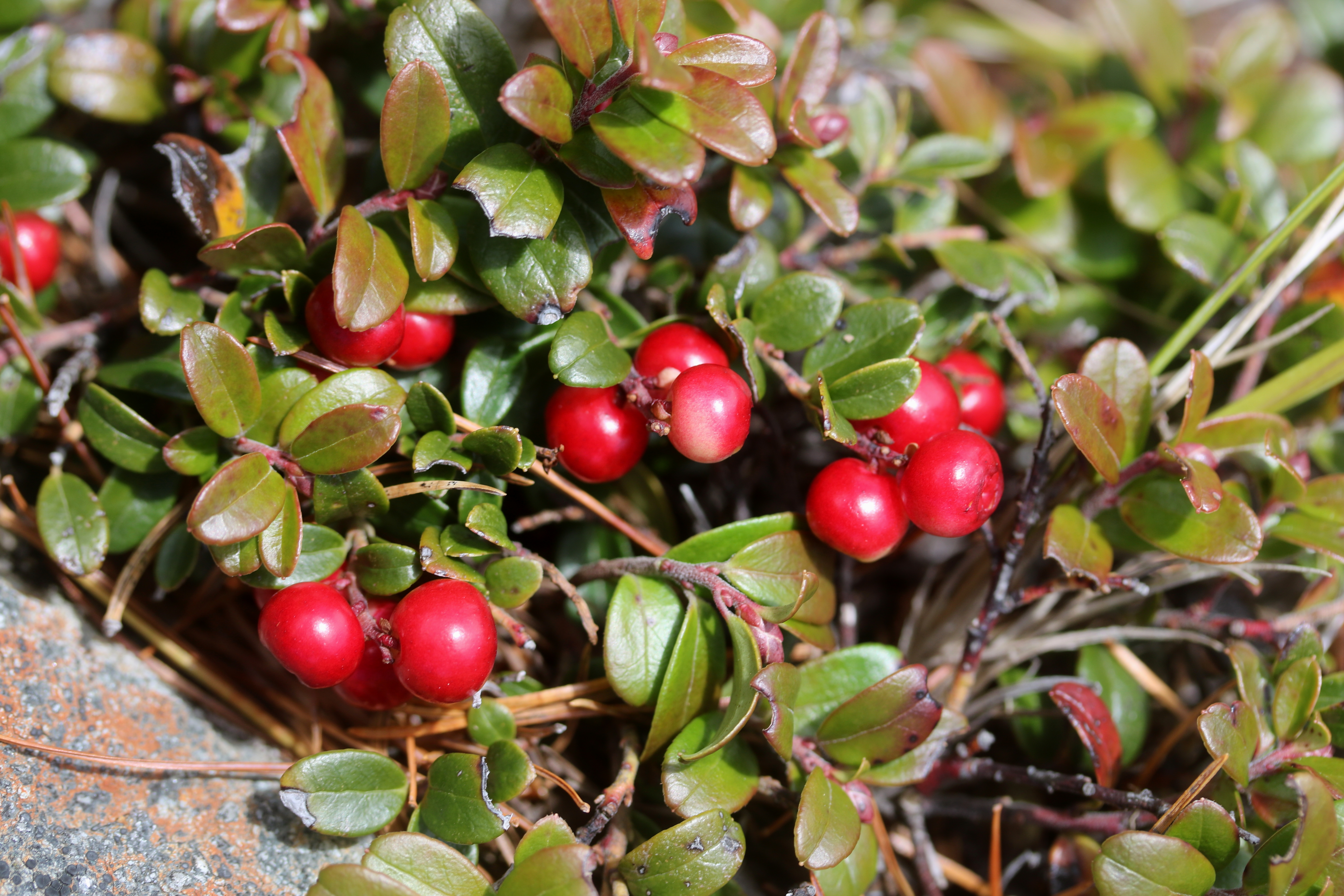
A tart boreal fruit suitable as food after positive identification, while historical leaf use and small mixed-food studies do not justify a medicinal leaf tea.
Being Tea Co provides education, not medical advice, treatment, or positive plant identification. Natural does not mean risk-free. Never ingest a wild plant or fungus from a photograph, app result, common name, or this website alone.
Herbs can cause allergic reactions and interact with medicines. Pregnancy, breastfeeding, childhood, surgery, seizure history, kidney or liver conditions, and other health factors can change what is appropriate. Ask a qualified clinician or pharmacist about your own situation.
At a glance
| Scientific name | Vaccinium vitis-idaea |
|---|---|
| Exact part | Fully ripe red fruit only; leaves excluded |
| Safety class | Guided food use · fruit only |
| Source | Expert-confirmed ripe fruit or a traceable commercial preserve |
| Season | Flowers after snowmelt; fruit generally ripens in late summer |
| Broad region | Circumboreal and widespread in Alaska |
Research lead—not positive identification or permission to harvest.
Identity
- A very low creeping evergreen subshrub that spreads by rhizomes into mats.
- Thick glossy leaves are elliptic to obovate, paler beneath, often with tiny dark gland dots and rolled-under margins.
- Small pink-white urn- or bell-shaped flowers nod in short terminal clusters.
- Bright-to-dark red round fruit contains multiple small seeds.
Lookalikes and exclusions
Bearberry, wintergreen, partridgeberry, and other low evergreen red-fruited plants share habitat. Leaf underside, flower form, fruit attachment, stem habit, and a regional key all matter. Never taste a berry to identify it.
Do not proceed if
- The scientific name, exact plant part, or maturity stage is uncertain.
- A dangerous or confusing lookalike has not been ruled out with current regional sources.
- The landowner or land manager has not expressly allowed collection.
- The population is sparse, protected, stressed, culturally sensitive, or needed by wildlife.
- Road runoff, spraying, industrial history, pet waste, polluted water, mold, or other contamination is possible.
- Your allergy, pregnancy, breastfeeding, childhood, surgery, health-condition, or medication questions have not been resolved.
Where and when
Lingonberry grows in forests, tundra, rocky exposed ground, bogs, and early-successional sites. Range and a low growth form are screening clues, not a final identification.
Harvest ethics
Pick ripe fruit without raking or tearing leaves, take a minority of the crop, and leave ample fruit for wildlife and local or subsistence harvesters. Confirm exact parcel rules.
Culinary and traditional context
Northern communities have long used the fruit as food and recorded leaf preparations. Name the community and source; do not turn historical leaf use into a universal modern remedy.
What the research can—and cannot—say
Human evidence is limited. Small studies of mixed berries, mixed cranberry-lingonberry juice, or short-term metabolism cannot establish that a home lingonberry drink treats diabetes, urinary infection, or another condition.
Side effects and interactions
- Consider berry allergy, reflux, or a sensitive stomach.
- Sweetened preserves can add substantial sugar; the label matters.
- People using glucose-lowering medicine should not use a berry drink as therapy.
- Do not extrapolate cranberry-warfarin discussions or one small CYP study into a blanket interaction claim.
Preparation
Use ripe, sound, expert-confirmed fruit as food or cook it into sauce or preserve. A spoonful of a properly prepared commercial preserve may be diluted in hot water. No leaf infusion or therapeutic dose is published.
Kitchen ritual & folklore
The low evergreen mat can invite a practice of humility and careful scale. Pick by hand, leave most fruit, and notice the whole habitat.
Folklore and personal ritual are presented as cultural or reflective practices. They are not evidence that an ingredient changes physiology, treats illness, predicts events, or is safe for a particular person.
Sources and review
- US Forest Service: Vaccinium vitis-idaea Species Review
- US Government Ethnobotanical Field Guide
- USDA NRCS: Alaska Berry Management Booklet
- PubMed: Controlled Lingonberry and Blackcurrant Meal Study
- PubMed: Randomized Cranberry-Lingonberry Juice Study
- PubMed: 2025 Lingonberry Powder Interaction Study
Editorial safety review: July 29, 2026. Re-check linked sources, local rules, and product labels before use; evidence and regulations change.
 Being Tea Co
.jpg)