A culinary spice whose different juniper species, deadly yew confusion, kidney cautions, and concentrated-oil risks rule out a beginner wild tea.
Being Tea Co provides education, not medical advice, treatment, or positive plant identification. Natural does not mean risk-free. Never ingest a wild plant or fungus from a photograph, app result, common name, or this website alone.
Herbs can cause allergic reactions and interact with medicines. Pregnancy, breastfeeding, childhood, surgery, seizure history, kidney or liver conditions, and other health factors can change what is appropriate. Ask a qualified clinician or pharmacist about your own situation.
At a glance
| Scientific name | Juniperus communis |
|---|---|
| Exact part | Purchased mature dried berry-like female cones |
| Safety class | Purchased only · culinary context, no tisane |
| Source | Labeled food-grade Juniperus communis spice |
| Season | Cones generally ripen August through October in their second or third season |
| Broad region | Circumboreal, including western Alaska and much of Canada |
Research lead—not positive identification or permission to harvest.
Identity
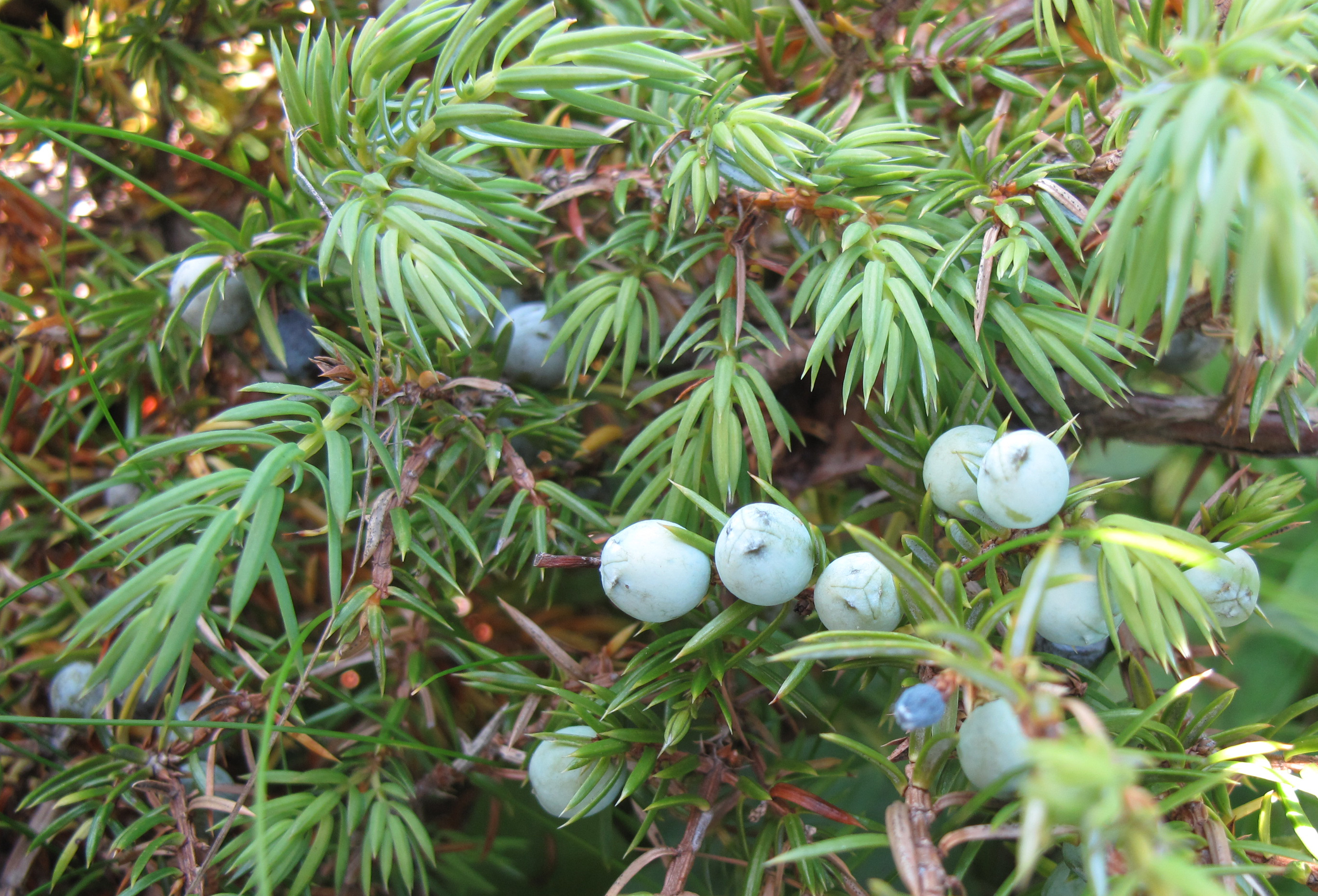
- Stiff sharp needle-like leaves remain needle-like at maturity and occur in whorls of three.
- Female cones begin green or red and mature to a glaucous blue-black.
- Cones commonly contain one to three seeds and are botanically cones, not berries.
- Plants are usually dioecious, so not every shrub bears cones.
Lookalikes and exclusions
Juniper species are chemically different, and savin juniper is not interchangeable. Deadly yew is a different needle-bearing ornamental associated with serious and fatal needle-tea poisonings. Never gather an unknown landscape conifer.
Do not proceed if
- The scientific name, exact plant part, or maturity stage is uncertain.
- A dangerous or confusing lookalike has not been ruled out with current regional sources.
- The landowner or land manager has not expressly allowed collection.
- The population is sparse, protected, stressed, culturally sensitive, or needed by wildlife.
- Road runoff, spraying, industrial history, pet waste, polluted water, mold, or other contamination is possible.
- Your allergy, pregnancy, breastfeeding, childhood, surgery, health-condition, or medication questions have not been resolved.
Where and when
Common juniper grows in open rocky ground and northern habitats, but slow growth, local scarcity, species confusion, and land rules make purchased culinary spice the responsible source.
Harvest ethics
Choose a food supplier that names Juniperus communis. Purchased material avoids damaging a slow-growing wild shrub and makes the ingredient more traceable.
Culinary and traditional context
Juniper cones appear in culinary seasoning, gin, and traditional urinary or digestive preparations. Ordinary seasoning does not establish safety for repeated concentrated drinks.
What the research can—and cannot—say
The European Medicines Agency’s internal-use monograph is based on traditional medicinal use, not strong modern clinical efficacy. This site does not translate it into a tisane or detox recipe.
Side effects and interactions
- Avoid medicinal use with severe kidney disease, kidney inflammation or infection, or a condition requiring fluid restriction.
- Pregnancy and breastfeeding are inappropriate contexts for medicinal juniper.
- Urinary pain, fever, spasm, or blood requires clinical evaluation.
- Juniper essential oil and concentrated extracts are not equivalent to dried culinary cones and can add irritation or aspiration risks.
Preparation
Use only purchased food-grade J. communis cones in ordinary culinary seasoning amounts. No juniper tea, detox, diuretic dose, essential-oil ingestion, or wild recipe is published.
Kitchen ritual & folklore
A few closed cones in a spice jar can stand for winter steadiness. Restraint—not concentration—is the governing practice.
Folklore and personal ritual are presented as cultural or reflective practices. They are not evidence that an ingredient changes physiology, treats illness, predicts events, or is safe for a particular person.
Sources and review
- US Forest Service: Juniperus communis Species Review
- European Medicines Agency: Juniper Cone Monograph
- European Medicines Agency: Final Juniper Cone Monograph
- Alaska DNR: Non-Timber Forest Products Harvest Manual
- Poison Control: Yew Poisoning
Editorial safety review: July 29, 2026. Re-check linked sources, local rules, and product labels before use; evidence and regulations change.
 Being Tea Co
