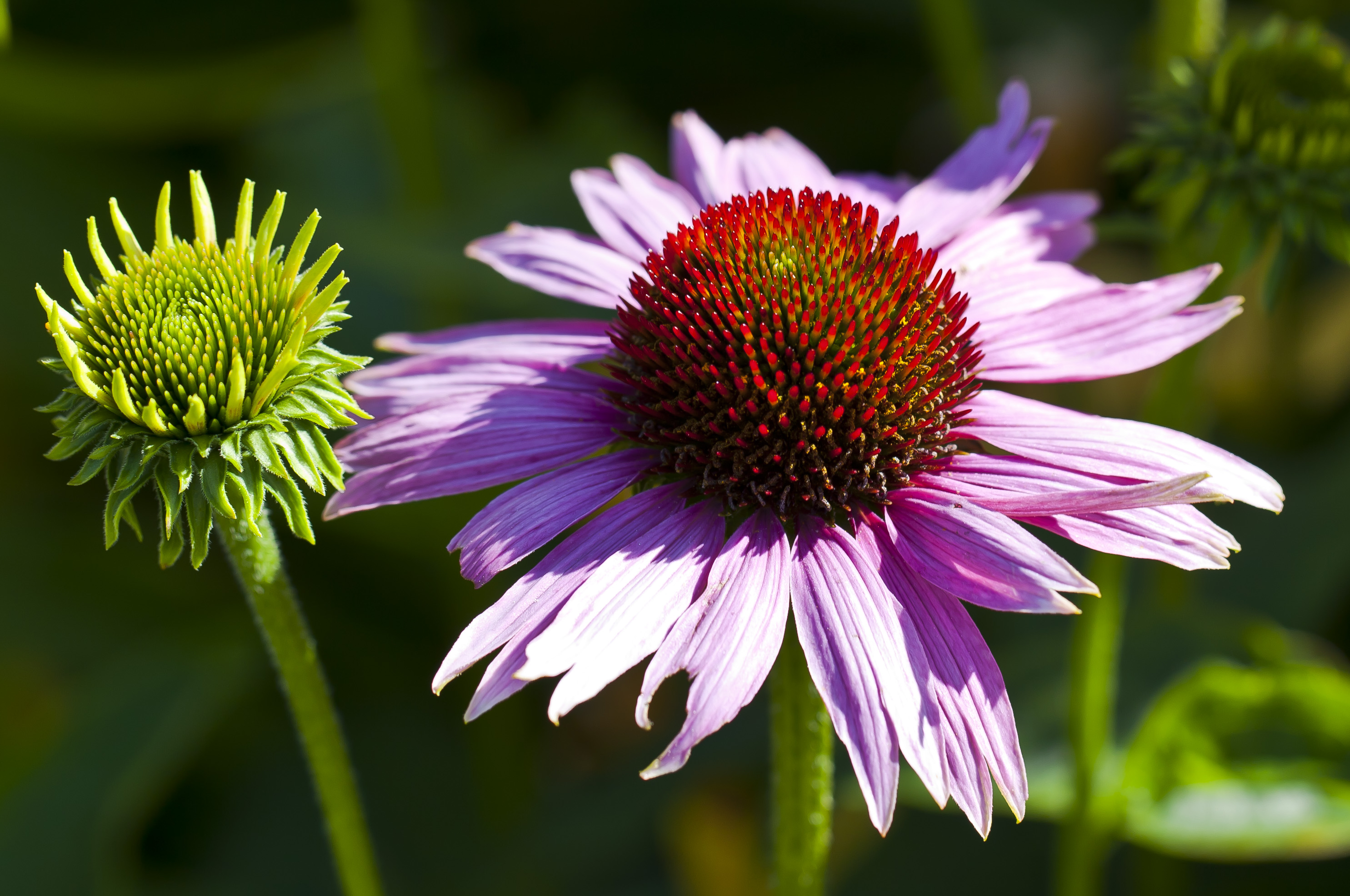
A widely marketed coneflower whose species, plant part, and extraction method change the product—while cold benefits remain modest or uncertain and allergy can be serious.
Being Tea Co provides education, not medical advice, treatment, or positive plant identification. Natural does not mean risk-free. Never ingest a wild plant or fungus from a photograph, app result, common name, or this website alone.
Herbs can cause allergic reactions and interact with medicines. Pregnancy, breastfeeding, childhood, surgery, seizure history, kidney or liver conditions, and other health factors can change what is appropriate. Ask a qualified clinician or pharmacist about your own situation.
At a glance
| Scientific name | Echinacea purpurea (L.) Moench |
|---|---|
| Exact part | Flowering aerial parts; root and other Echinacea species excluded |
| Safety class | Purchased product only · short-term adult use |
| Source | Single-ingredient product naming Echinacea purpurea, flowering aerial parts, and preparation |
| Season | Commercial product year-round; cultivated plants flower in summer |
| Broad region | Native to the central and eastern United States and cultivated widely |
Research lead—not positive identification or permission to harvest.
Identity
- This profile concerns the flowering aboveground parts of Echinacea purpurea; roots and E. angustifolia, E. pallida, or mixed-species products are different materials.
- The plant is a daisy-family perennial with a prominent spiny orange-brown cone and usually purplish drooping ray florets, but cultivated colors and hybrids vary.
- Research has used fresh expressed juice, dried material, root, mixed plant parts, tablets, and extracts; a shared common name does not make those preparations equivalent.
- Use only a product whose label states the Latin species, exact plant part, preparation, full ingredient list, and directions. A garden photograph cannot establish medicinal-product identity.
Lookalikes and exclusions
Other Echinacea species, black-eyed Susans (Rudbeckia), prairie coneflowers (Ratibida), and ornamental hybrids can share a cone-shaped flower head. This profile does not teach wild harvest, and it does not transfer evidence from one species or root extract to an aerial-part infusion.
Do not proceed if
- The scientific name, exact plant part, or maturity stage is uncertain.
- A dangerous or confusing lookalike has not been ruled out with current regional sources.
- The landowner or land manager has not expressly allowed collection.
- The population is sparse, protected, stressed, culturally sensitive, or needed by wildlife.
- Road runoff, spraying, industrial history, pet waste, polluted water, mold, or other contamination is possible.
- Your allergy, pregnancy, breastfeeding, childhood, surgery, health-condition, or medication questions have not been resolved.
Where and when
Choose a cultivated, labeled commercial product rather than digging roots or collecting a wild coneflower. The species is not native to Alaska, and an ornamental planting may be a hybrid or pesticide-treated.
Harvest ethics
Avoid wild root harvest and favor cultivated supply. When discussing Indigenous histories, name the nation and source; “Native American remedy” is too broad and should not be used as a sales claim.
Culinary and traditional context
Several Indigenous peoples have distinct documented relationships with coneflowers, and modern European herbal products developed different standardized preparations. These histories deserve attribution and do not prove a generic “immune boost.”
What the research can—and cannot—say
NCCIH says some echinacea products may slightly reduce the chance of catching a cold, but it remains unclear whether they shorten one. Product variability prevents easy comparison. A 719-person randomized trial of a root preparation found no statistically significant reduction in overall cold severity or duration; neither result validates a flowering-herb tea as treatment.
Side effects and interactions
- Echinacea can cause digestive symptoms and allergic reactions, including severe reactions; risk deserves extra caution with ragweed or daisy-family allergy, asthma, eczema, or an atopic history.
- There are theoretical interactions with immunosuppressants, caffeine, and some medicines processed by liver enzymes. Review use with a pharmacist if taking medicines.
- People with autoimmune disease, immune deficiency, transplant care, cancer treatment, or other immune-modifying therapy should obtain clinician guidance rather than using an “immune” product independently.
- Pregnancy data are limited and breastfeeding safety is poorly known; consult the relevant clinician. Ask a pediatric clinician before giving echinacea to a child because rashes occurred in a trial.
- A fever, breathing difficulty, dehydration, chest pain, or persistent or worsening respiratory symptoms requires appropriate medical assessment, not a longer herbal course.
Preparation
If a healthy adult chooses it, use one short course of a single-ingredient product that matches this profile and follow that product’s label exactly. The site publishes no garden-harvest tea, preventive daily routine, root dose, tincture, or “immune-boosting” recipe. Stop immediately for rash, swelling, wheeze, or worsening symptoms.
Kitchen ritual & folklore
The sturdy cone can symbolize boundaries and discernment. The matching practice is reading the whole label and knowing when to stop, not imagining an invulnerable immune system.
Folklore and personal ritual are presented as cultural or reflective practices. They are not evidence that an ingredient changes physiology, treats illness, predicts events, or is safe for a particular person.
Sources and review
- NCCIH: Echinacea Usefulness and Safety
- European Medicines Agency: Echinacea purpurea Flowering Herb
- Royal Botanic Gardens, Kew: Echinacea purpurea
- PubMed: 719-Participant Randomized Cold Trial
- PubMed: Cochrane Review of Echinacea for Colds
Editorial safety review: July 29, 2026. Re-check linked sources, local rules, and product labels before use; evidence and regulations change.
 Being Tea Co
