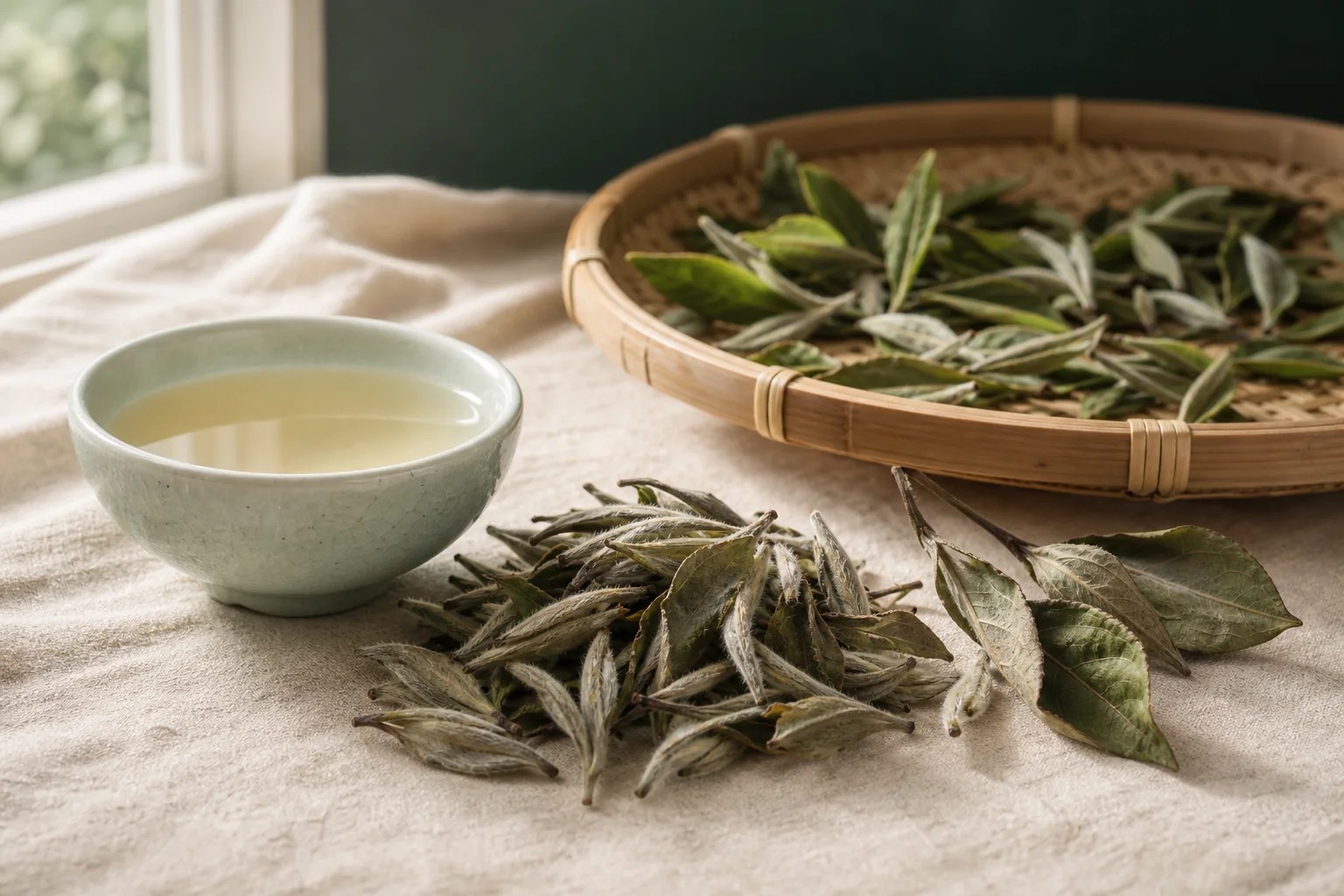
Wither · Dry
Transformation through time, airflow and gentle handling.
What it is
White tea is generally withered and dried with little or no rolling and without the early fixation used for green tea. It is often described as minimally processed, but that does not mean chemically unchanged or completely unoxidized.
How it is made
- Pluck buds and/or leaves
- Wither with controlled airflow
- Dry to stabilize
- Sort or compress when desired
Styles to know
- Baihao Yinzhen / Silver Needle
- Bai Mudan / White Peony
- Gong Mei
- Shou Mei
- Fresh and intentionally aged white tea
In the cup
Bud-heavy teas may emphasize downy texture and delicate aromatics; leafier grades can be deeper, fruitier and more structured. Neither is automatically the superior experience.
A starting brew
Start with 2.5–3.5 g per 250 mL at 80–90°C / 176–194°F for 3–5 minutes. Mature, compressed or leaf-heavy white tea may welcome hotter water.
Storage
For freshness, keep sealed, dry, cool, dark and odor-free. Treat intentional aging as a controlled storage project, not permission for humidity or contamination.
Questions to ask before buying
- What was harvested—buds, leaves, or both?
- When and where was it made?
- Is an age claim supported by storage history?
 Being Tea Co