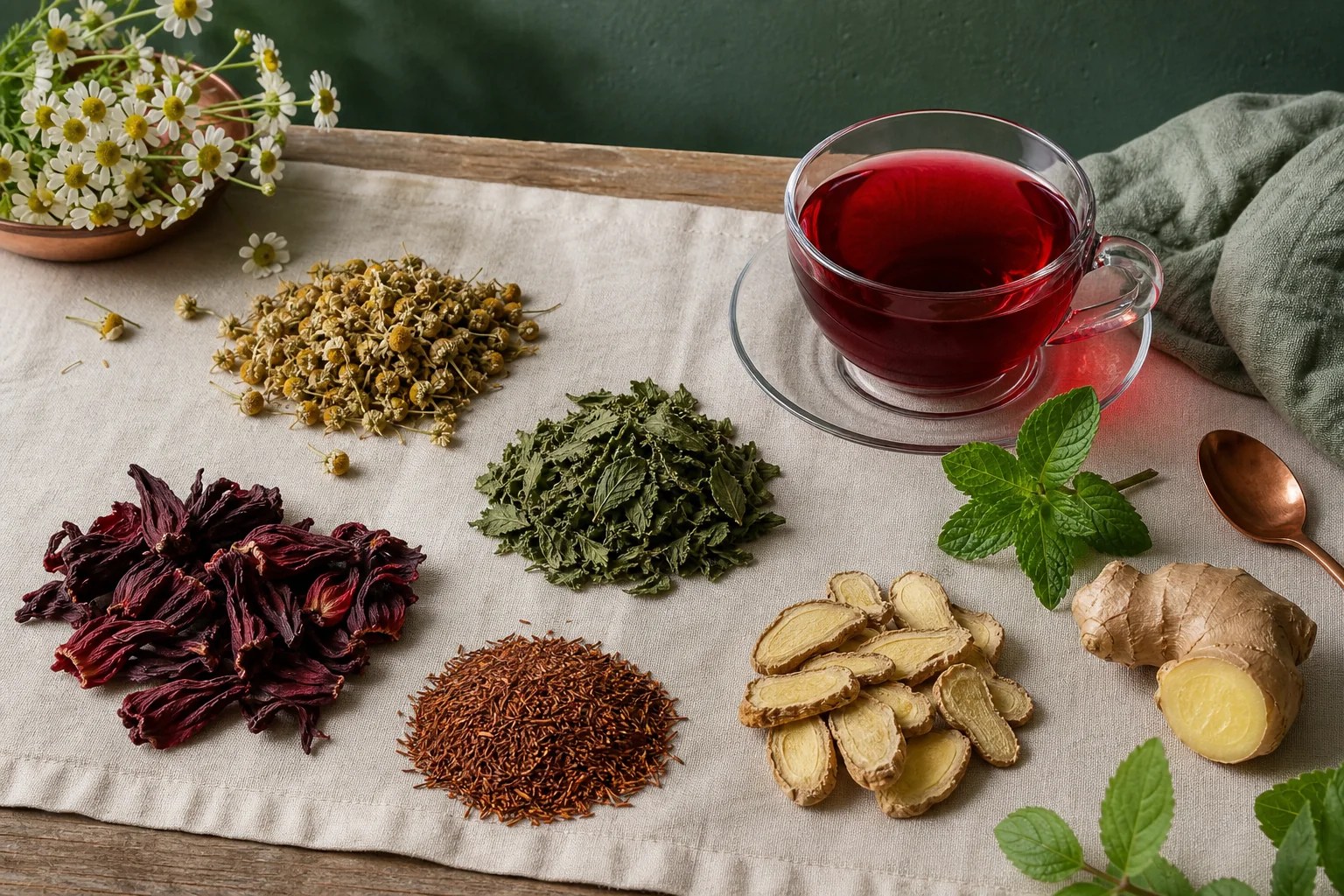
Herb · Fruit · Root · Spice
A neighboring world of infusions—not one seventh tea family.
What it is
Peppermint, chamomile, rooibos, ginger, hibiscus and similar drinks are tisanes rather than Camellia sinensis tea. Their brewing, caffeine and safety profiles depend on the exact plant and plant part.
How it is made
- Identify the botanical and part
- Choose infusion or decoction
- Use food-grade material
- Follow ingredient-specific cautions
Styles to know
- Leaves and flowers
- Fruit and calyces
- Roots and rhizomes
- Bark, seeds and spices
- Caffeinated mate, guayusa and yaupon
In the cup
A tisane can be delicate, tart, spicy, sweet or bitter. “Herbal” does not mean caffeine-free, medicine-free or automatically safe in concentrated amounts.
A starting brew
Use the supplier’s food-use directions. Delicate leaves and flowers are usually covered and infused; dense roots, bark and spices may need a short simmer. There is no safe universal recipe for every botanical.
Storage
Keep dry, sealed and correctly identified. Discard material with insects, moisture damage or mold, and respect the shorter shelf life of aromatic ingredients.
Questions to ask before buying
- What is the full botanical name?
- Which plant part is used?
- Are there ingredient-specific medicine, allergy or pregnancy cautions?
 Being Tea Co