Maocha · Wet pile · Dry · Compress
A deliberate microbial process, not a shortcut that copies old sheng.
What it is
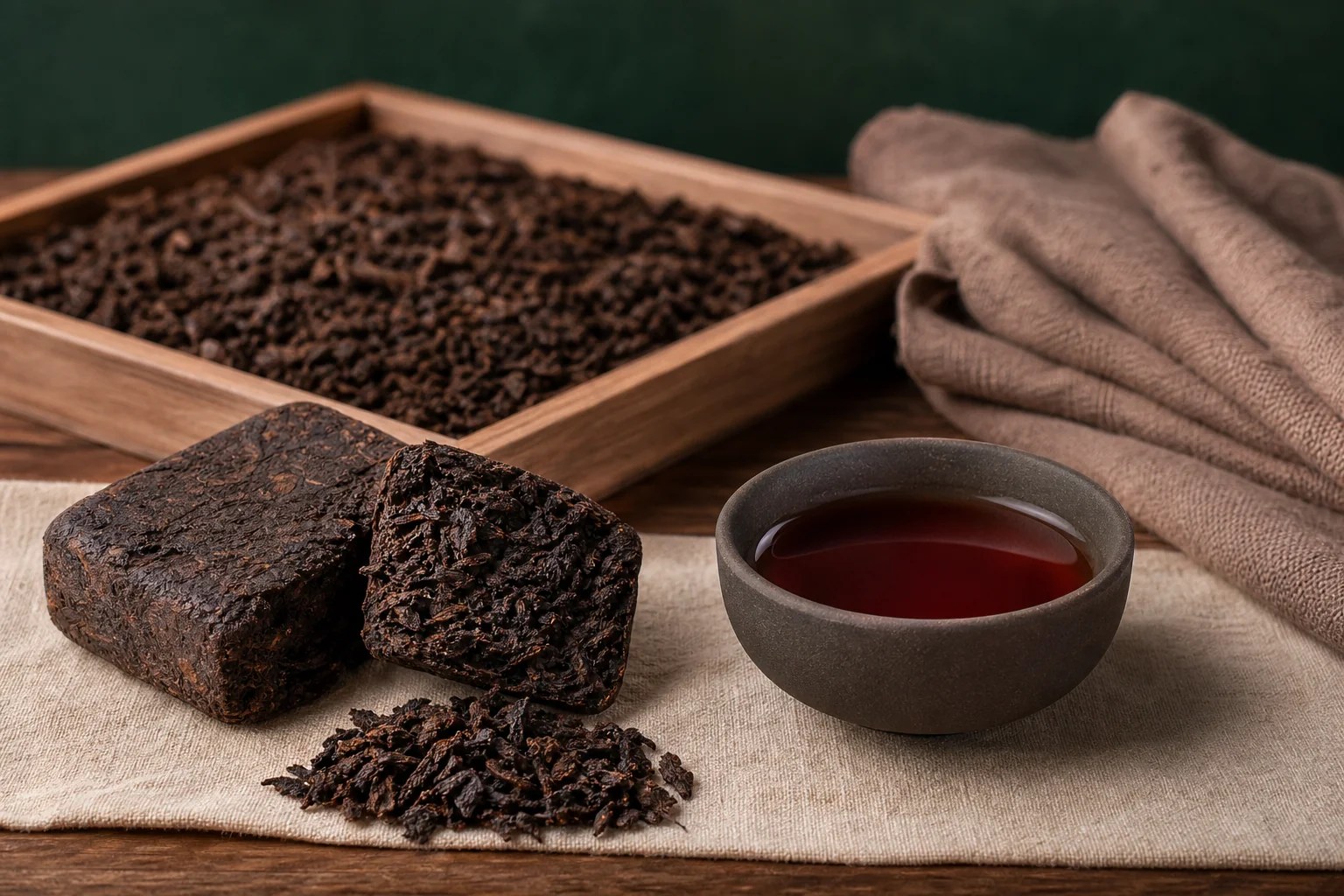
Shou receives an additional warm, humid pile-fermentation process—wo dui—followed by drying and often compression. It creates a dark, mellow profile more quickly but does not duplicate decades of sheng aging.
How it is made
- Begin with sun-dried green material
- Moisten and pile under controlled conditions
- Turn through microbial succession
- Dry, sort and often compress
Styles to know
- Loose shou
- Pressed cakes, bricks and tuos
- Factory recipes
- Small-batch fermentations
In the cup
Clean shou can suggest damp forest floor without tasting moldy: look for wood, cacao, grain, dates and a rounded texture rather than fishiness or contamination.
A starting brew
Start near boiling. Western: 3–4 g per 250 mL for 2–4 minutes. Gongfu: 5–8 g per 100–120 mL with a quick rinse if desired for debris—not as decaffeination.
Storage
Keep clean, stable and odor-free. Further storage may change it, but age cannot repair poor material, faulty fermentation or contamination.
Questions to ask before buying
- Who fermented it and when?
- Is the batch identified?
- Does the aroma read as clean fermentation rather than damp storage?
 Being Tea Co