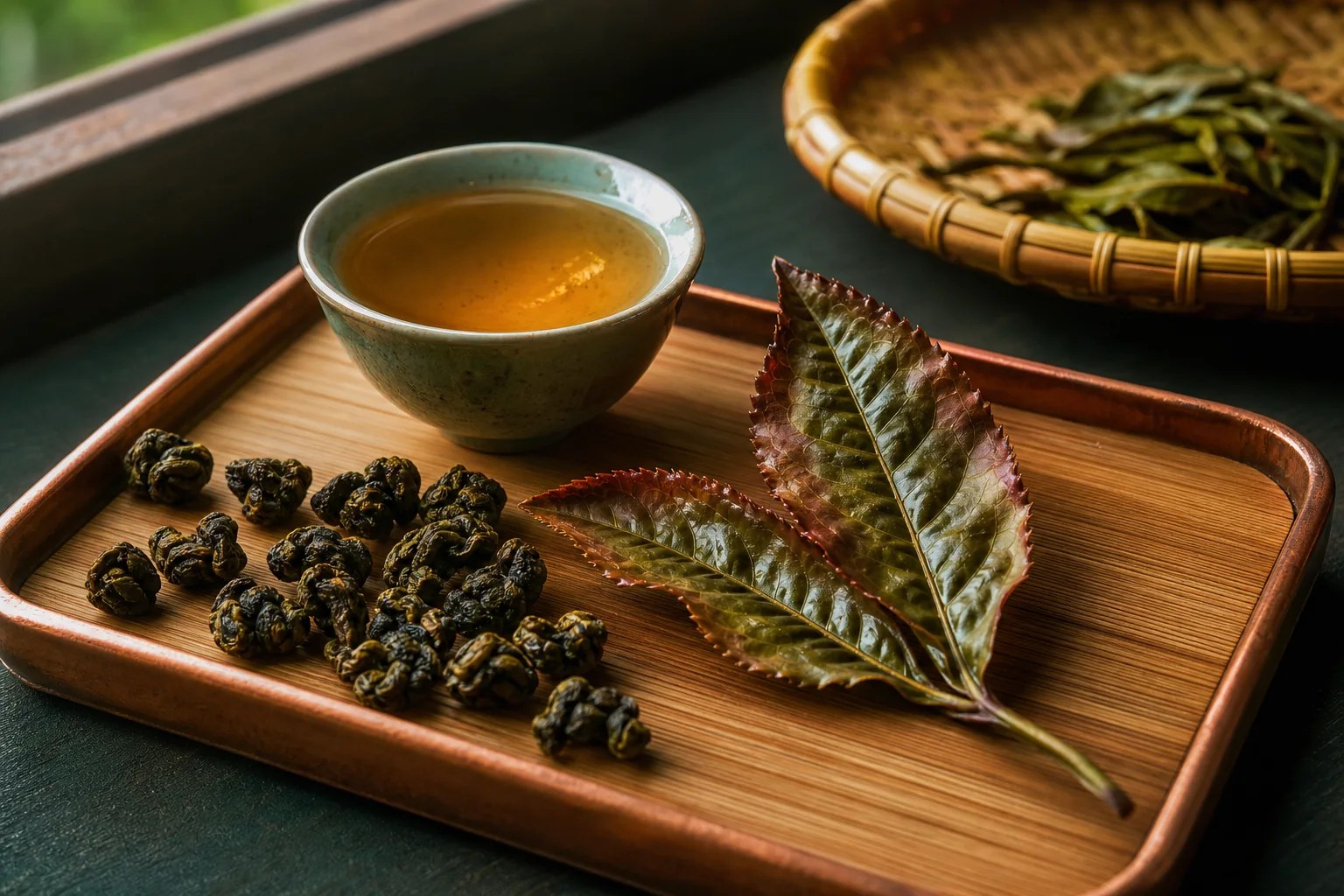
Wither · Bruise · Oxidize · Fix
Not one midpoint, but many traditions of controlled transformation.
What it is
Oolong uses selective bruising and carefully managed partial oxidation before fixation, shaping and drying. Oxidation, roast, cultivar, shape and region are separate dimensions—not one simple light-to-dark ladder.
How it is made
- Wither
- Shake or bruise in stages
- Manage oxidation
- Fix with heat
- Shape, dry and sometimes roast
Styles to know
- Anxi and ball-rolled oolong
- Wuyi rock tea / yancha
- Phoenix / Dancong
- Taiwanese high-mountain and Baozhong
- Dong Ding and Oriental Beauty
In the cup
Oolong can move from spring flowers and cream to stone fruit, wood, spice and roast. The opened leaf across later infusions is part of the lesson.
A starting brew
Western start: 2.5–4 g per 250 mL at 85–100°C / 185–212°F for 2–4 minutes. Gongfu start: about 5–8 g per 100–120 mL with brief, fully decanted infusions.
Storage
Keep sealed, dry, cool and odor-free. Greener oolongs often reward freshness; well-roasted teas can settle and evolve, but storage quality still matters.
Questions to ask before buying
- Which regional style and cultivar?
- How oxidized and roasted is it?
- When was it made or last re-roasted?
 Being Tea Co