Fix · Shape · Dry
One family, from pan-fired chestnut to steamed ocean air.
What it is
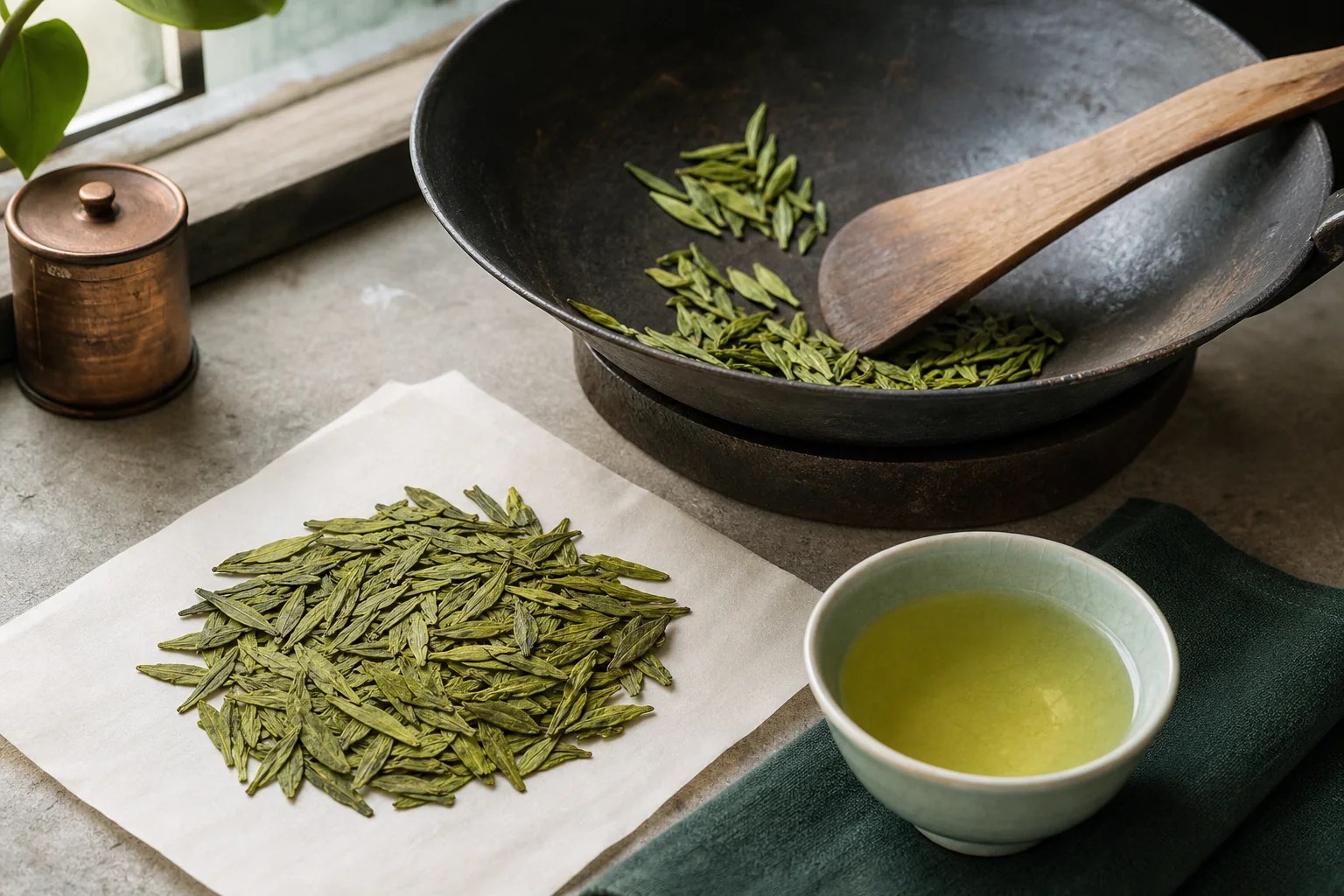
Green tea receives early heat fixation—often pan-firing or steaming—to slow enzymatic oxidation before shaping and drying. Style, cultivar, shading and finishing create an enormous sensory range.
How it is made
- Pluck
- Heat-fix early
- Roll or shape
- Dry; sometimes roast or blend
Styles to know
- Longjing and Chinese pan-fired greens
- Sencha and fukamushi
- Gyokuro and kabusecha
- Tencha and matcha
- Bancha, hojicha and genmaicha
In the cup
Pan-fired greens can be nutty and sweet; steamed Japanese greens may be grassy, marine and umami-rich. Matcha is a suspension of finely milled tencha, not a strained infusion.
A starting brew
For Chinese pan-fired green tea, start with 2–3 g per 250 mL at 75–85°C / 167–185°F for 1.5–3 minutes. Japanese styles deserve their own method and often shorter, cooler infusions.
Storage
Protect from heat, air, light, moisture and odor. Freshness matters especially for delicate steamed tea and matcha; follow the producer’s refrigeration guidance for sealed product.
Questions to ask before buying
- Was the tea steamed or pan-fired?
- What harvest and packaging dates are supplied?
- For matcha, is the origin and milling information specific?
 Being Tea Co