Tea’s enemies are ordinary—heat, moisture, oxygen, light, and odor. A calm storage system preserves more than a cupboard full of gadgets.
7 minutes read · Care
Good storage is quiet. It does not make tea better every morning. It prevents the environment from making tea worse.
Finished tea is dry and readily takes on moisture and odor. Aroma compounds can fade or transform with oxygen, heat, and time. Light can accelerate change. The practical goal for most tea is therefore simple: keep it cool, dark, dry, sealed, and away from smells.
The five everyday threats
Heat. A cabinet above the kettle or beside the oven experiences repeated heat. Choose an interior cupboard away from appliances and sunlight.
Moisture. Steam from a sink, dishwasher, or stove is the enemy of a dry leaf. Never scoop with a damp spoon. Close the package promptly.
Oxygen. Every opening replaces protective packaging atmosphere with room air. Buy amounts you can finish, divide bulk tea into smaller working portions, and press excess air from barrier pouches when practical.
Light. Clear glass looks beautiful but exposes leaf. Put clear jars inside a closed cupboard, or use opaque containers.
Odor. Tea can absorb the smell of coffee, spices, incense, soap, wood finishes, or the cupboard itself. Airtightness matters in both directions.
Reviews of tea aroma describe storage as one of the factors that changes volatile compounds and sensory quality (Recent Advances in Volatiles of Teas). Studies of black tea likewise report that heat and moisture accelerate undesirable deterioration (review of black-tea harvesting and processing).
A three-layer system
Layer one: the inner barrier. Keep tea in its heat-sealed foil or high-barrier pouch when possible. Roll or press out excess air and use the closure.
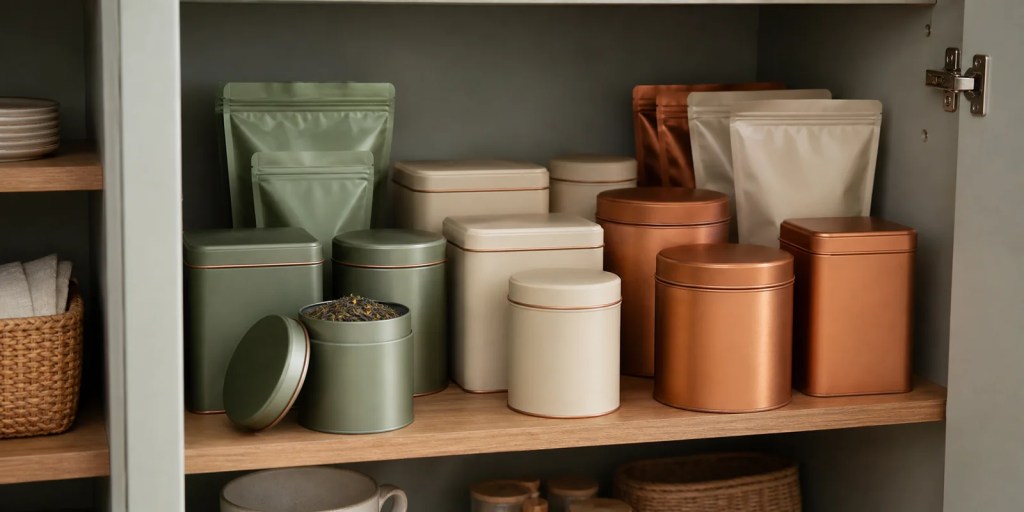
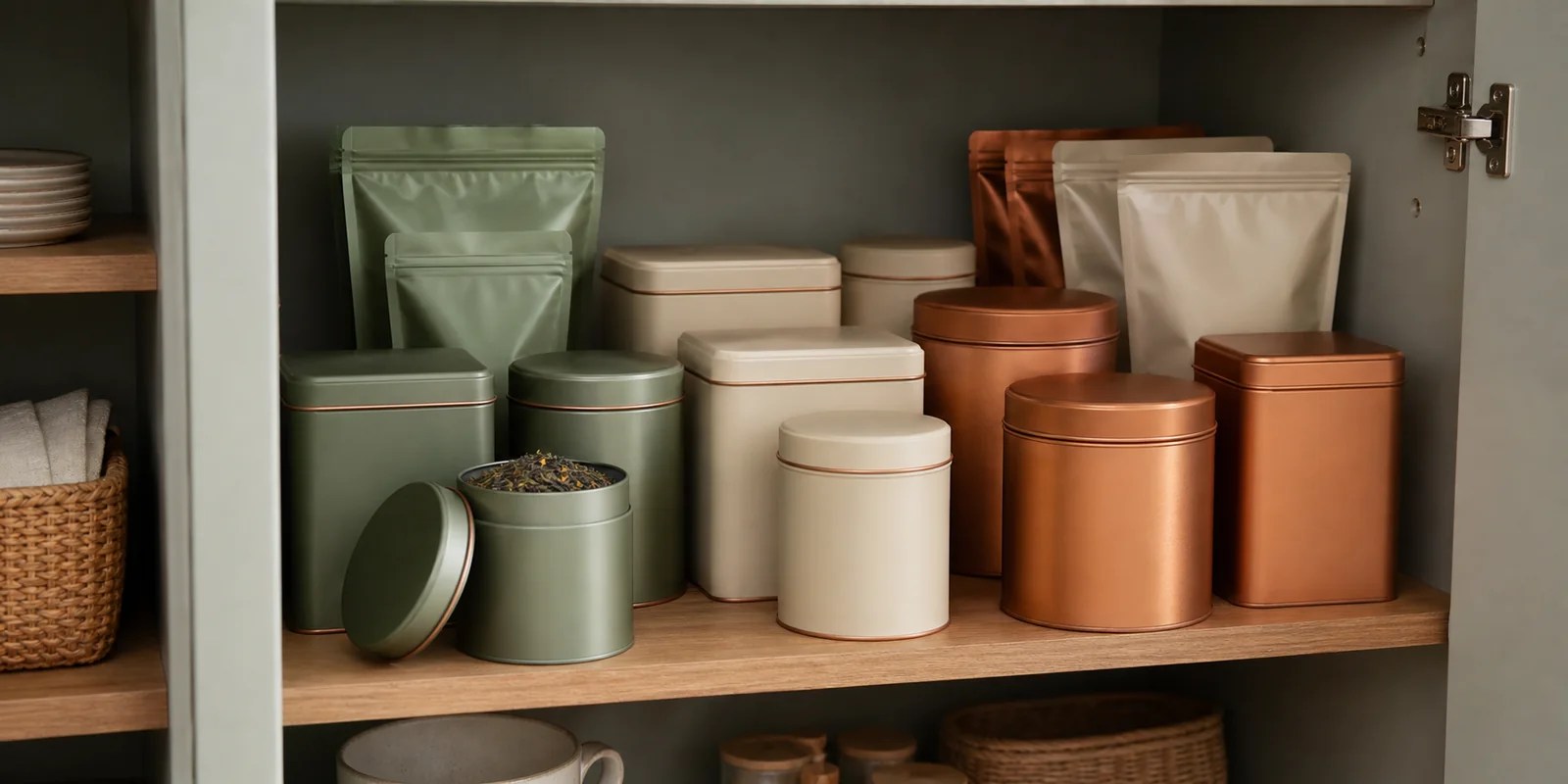
Layer two: the container. Place the pouch in an opaque, food-safe tin or canister with a sound lid. The container protects from light, puncture, and cupboard odor. Decanting loose leaf directly into a decorative tin is less useful if the lid leaks.
Layer three: the location. Use a stable, cool cupboard away from steam, sun, spices, cleaning products, and temperature swings.
Label tea name, origin, harvest or purchase date, and opened date. This modest record prevents an unlabeled “mystery tin” from becoming permanent furniture.
Different teas, different clocks
Green tea and very fresh oolong: prioritize freshness, low heat, and minimal oxygen exposure. Buy small. Some unopened, factory-sealed teas benefit from refrigeration, particularly when the producer or specialist recommends it.
White, black, and roasted oolong: generally keep sealed at stable room temperature. Some are made for aging, but do not assume every tea improves.
Scented tea: isolate strongly scented jasmine, smoke, spice, or flavored blends so they do not perfume neighbors.
Matcha: protect aggressively from heat, light, moisture, and oxygen; follow the maker’s storage guidance and use soon after opening.
Pu-erh and other aging dark teas: do not automatically seal them like fresh green tea or leave them exposed. Their storage is a specialist subject shaped by climate, packaging, and intended transformation. Excess humidity can create mold; odor exposure can permanently taint them. Research shows that relative humidity changes both microbial communities and chemical components in raw dark tea (study).
Refrigeration without condensation
The refrigerator contains moisture and strong odors. Only refrigerate tea in a genuinely sealed, odor-proof package. When removing it, let the sealed package reach room temperature before opening; otherwise humid room air may condense on cold leaf.
Avoid repeatedly moving the same open package in and out. Keep a small working portion at room temperature and a sealed reserve cold if the tea warrants it.
What to discard
Flat aroma is disappointing, not necessarily dangerous. Active mold is different. Do not drink tea with fuzzy growth, damp clumping, unexpected moisture, or a persistent moldy odor. Do not try to roast, rinse, or sun a suspect tea back to safety.
For expensive aged tea, seek expert evaluation—but do not let price pressure you into drinking something questionable.
The monthly five-minute reset
Once a month:
- close every pouch;
- check tins for odor and moisture;
- move near-expiry teas to the front;
- note what is open;
- choose one tea to finish before buying more.
Storage is part of respecting labor. Growers and makers controlled moisture, heat, and time long before the leaf reached you. A clean pouch, a decent tin, and a cool cupboard carry that care the final few feet to the cup.

